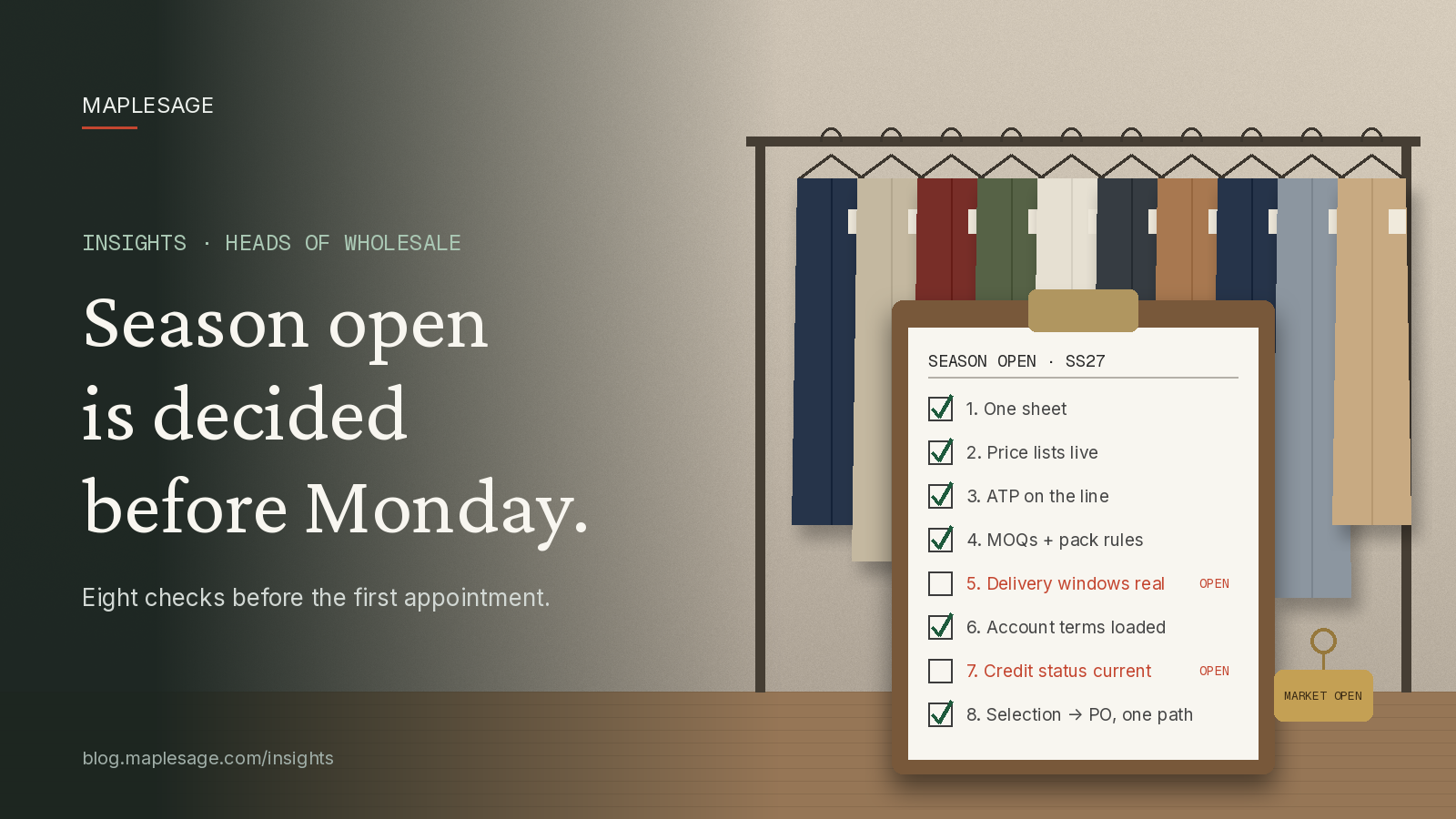
Six of eight ticked. The two open items are the ones buyers find first.
The first appointment of the season is on Monday. The samples are steamed, the rail is merchandised, the reps have the deck. On Tuesday a buyer asks for a style that is already short, on a delivery window the factory cannot hit, at a price that was updated last Thursday in a different file.
None of that was a showroom problem. It was decided before the doors opened.
Why season open is the expensive week
Everything the buyer sees in the first two weeks becomes a commitment: price, quantity, delivery, terms. Fixing a wrong number after a buyer has planned against it costs more than fixing it before the line opens. And the biggest accounts book first.
The checklist
Eight things to confirm before the first appointment. Each one should have a named owner and a yes or no, not a “should be fine.”
1. One sheet. There is one current line sheet per market and channel. Reps, showroom and the buyer portal all read from it. No local copies.
2. Price lists are live. Wholesale, MSRP and any account-specific price lists are loaded and checked against costing. Currency and tier rules are set.
3. ATP is on the line. Available-to-promise by style, colour and delivery window is visible where the buyer chooses, not in a separate report.
4. MOQs and pack rules are set. Style and colour minimums, prepack ratios and order units are on each line, so exceptions get flagged at selection, not after the cut.
5. Delivery windows are real. Each window matches confirmed production and freight dates. If a window is at risk, it is marked before a buyer books against it.
6. Account terms are loaded. Payment terms, dating, discounts, routing guides and chargeback rules for every key account are attached to the account, not to a rep’s memory.
7. Credit status is current. Holds and limits are reviewed before the season, so a large order does not get confirmed and then stopped at credit.
8. Selection to PO is one path. A buyer’s selection becomes a quote, the quote becomes a PO, and the PO becomes production demand, without retyping.
What it costs to skip it
Reps quoting from different versions. Buyers planning against stock that is already gone. Exceptions approved on WhatsApp that never reach the PO. Orders stuck at credit in the busiest week. Each one turns into a cancellation, a chargeback or a margin concession.
How to run it
Three weeks out: sheet, price lists and pack rules locked. Changes after this go through one owner.
Two weeks out: ATP and delivery windows reconciled with production. Account terms and credit reviewed for the top accounts.
One week out: a dry run. One rep builds a full order for a real account from selection to PO. Every manual step they hit is a gap.
A one-week test
Take last season’s first two weeks of bookings. Check:
- How many orders were changed after confirmation because of price, ATP or delivery?
- How many exceptions were agreed outside the system?
- How many orders were held at credit after the buyer confirmed?
If the answers are more than a handful, the problem was set before the season opened.
The short version
Season open is not a showroom event. It is the week your data becomes commitments. Confirm the eight items before the first appointment, give each one an owner, and the first two weeks of bookings stay as booked.
MapleSage Retail-OS keeps the wholesale spine in one place: sheet → selection → quote → PO → production. More Insights at blog.maplesage.com.