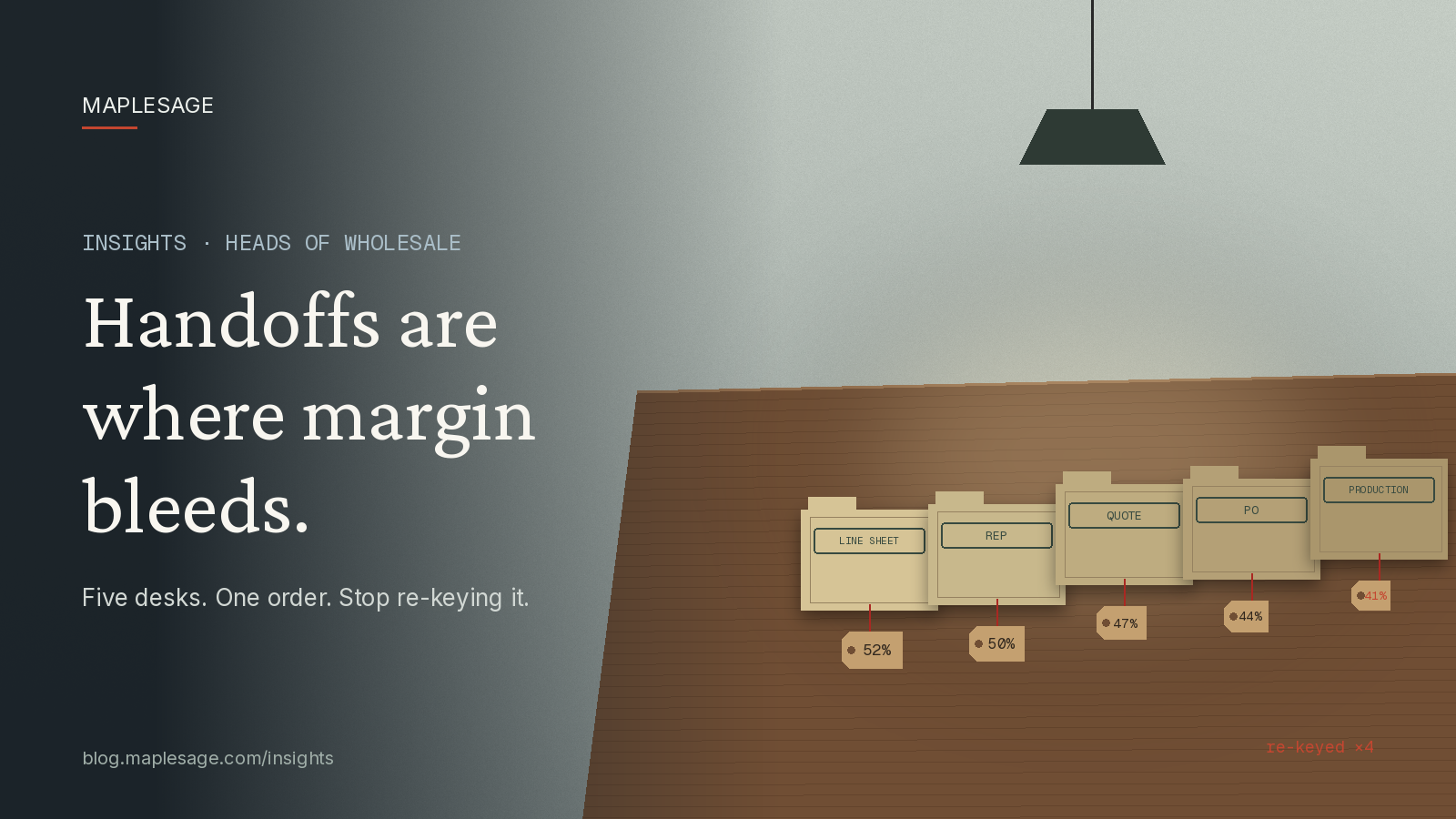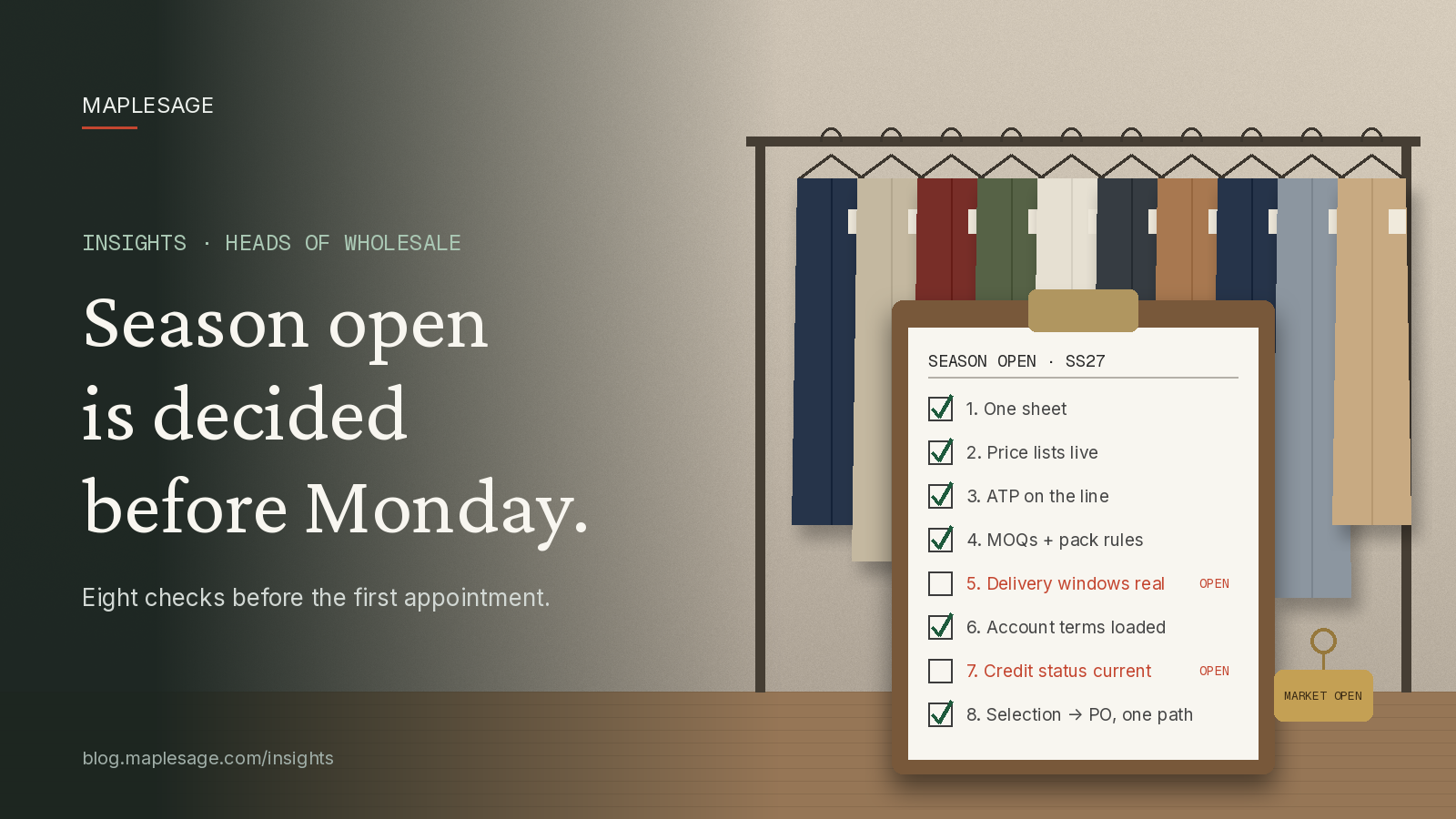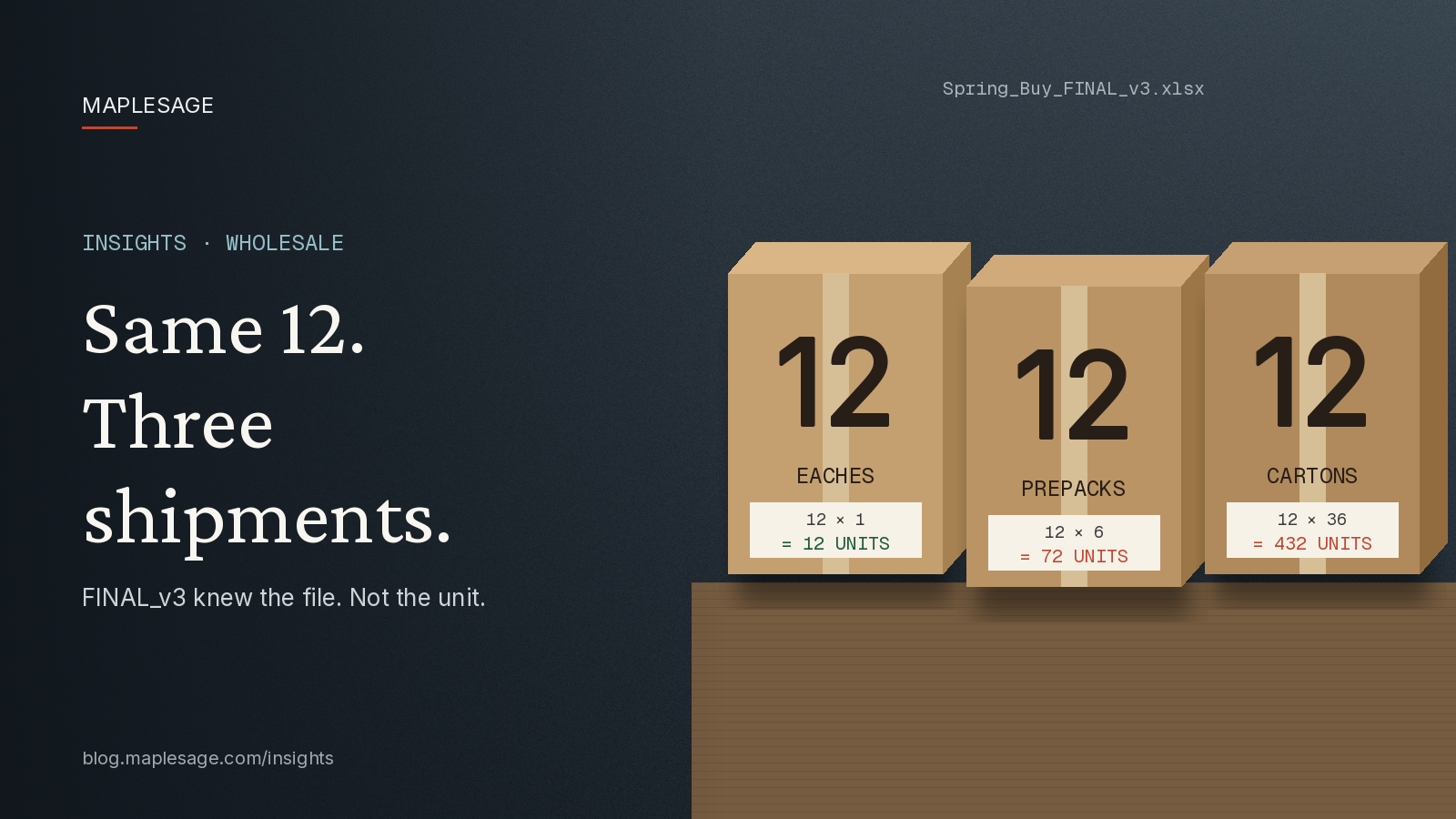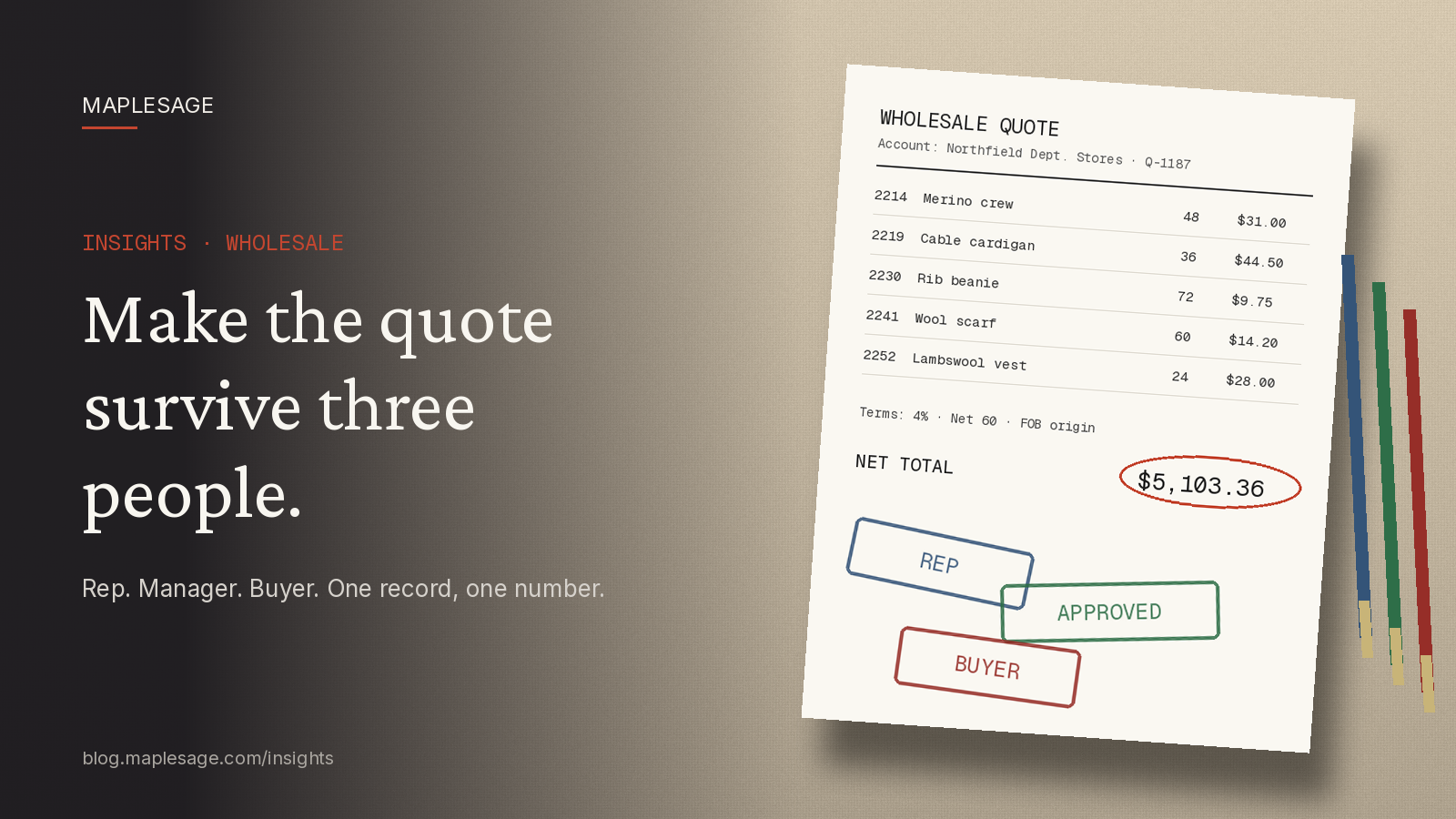
One quote, three hands. The total should be the same after the third stamp as it was after the first.
A wholesale quote looks like one document. In practice it is touched by at least three people before it becomes a PO: the rep who builds it, the manager who approves the price and terms, and the buyer who signs it. Each of them changes something. Most of the time nobody can say afterwards who changed what.
That is why the number on the PO so often differs from the number the rep promised in the room, and why the margin you approved is not the margin you ship.
The three touches
1. The rep builds it. Styles, colours, units and a price, usually from a line sheet, a showroom selection or a buyer’s spreadsheet. Risk: the rep works from an old price list, rounds pack quantities, or promises a discount to close the appointment.
2. The manager approves it. A Head of Wholesale or sales manager checks price, discount, MOQ and delivery window. Risk: approval happens in email or chat, against a screenshot or an attachment, not against the quote itself. The next version of the file never gets approved at all.
3. The buyer signs it. The buyer edits units, drops styles, asks for different dating or freight, and sends back “approved with changes.” Risk: those changes are typed into the next version by hand, and nobody re-checks the margin.
Where the quote breaks
- Versions multiply. Quote_v2, Quote_FINAL, Quote_FINAL_buyer-edits. Production picks one. It is not always the right one.
- Terms ride outside the quote. Free freight or 60-day dating agreed in a call never reaches the document the PO is keyed from.
- Approval does not travel. The manager approved v2. The buyer signed v4. Nobody approved v4.
- Margin is checked once. Price is checked at the rep’s draft, not after the buyer’s edits, which is where units and mix change.
Rules that make the quote survive
One quote record, not files. Every touch edits the same quote. Versions are a history on that record, not new attachments.
Every change has a name and a reason. Rep, manager or buyer, each change is logged with who made it and why. “Buyer dropped style 2214, replaced with 2219” is a line on the record, not a memory.
Terms live on the quote. Discount, dating, freight, routing and chargeback rules sit on the quote and the account, so they reach the PO without retyping.
Re-approve on material change. If price, discount, units or delivery window move past a threshold after approval, the quote goes back for approval automatically. Small edits pass. Margin-moving edits do not.
Check margin last, not first. Run the margin check after the buyer’s final edits, on the version that becomes the PO.
A quick audit
Pull the last twenty quotes that became POs for your top accounts and check three things:
- Does the PO match the last version the buyer signed, line by line?
- Was that version the one the manager approved?
- Are all agreed terms (discount, dating, freight) on the PO, or only in email?
If fewer than fifteen of twenty pass all three, the quote is not surviving its three touches, and the gap is showing up in markdown money and chargebacks.
The short version
A quote is a shared object, not a file passed between inboxes. Keep one record, log every change, keep the terms on it, re-approve when the margin moves, and check margin on the final version. Then the number the rep promised, the number the manager approved and the number the buyer signed are the same number.
MapleSage Retail-OS keeps the wholesale spine in one place: sheet → selection → quote → PO → production. More Insights at blog.maplesage.com.