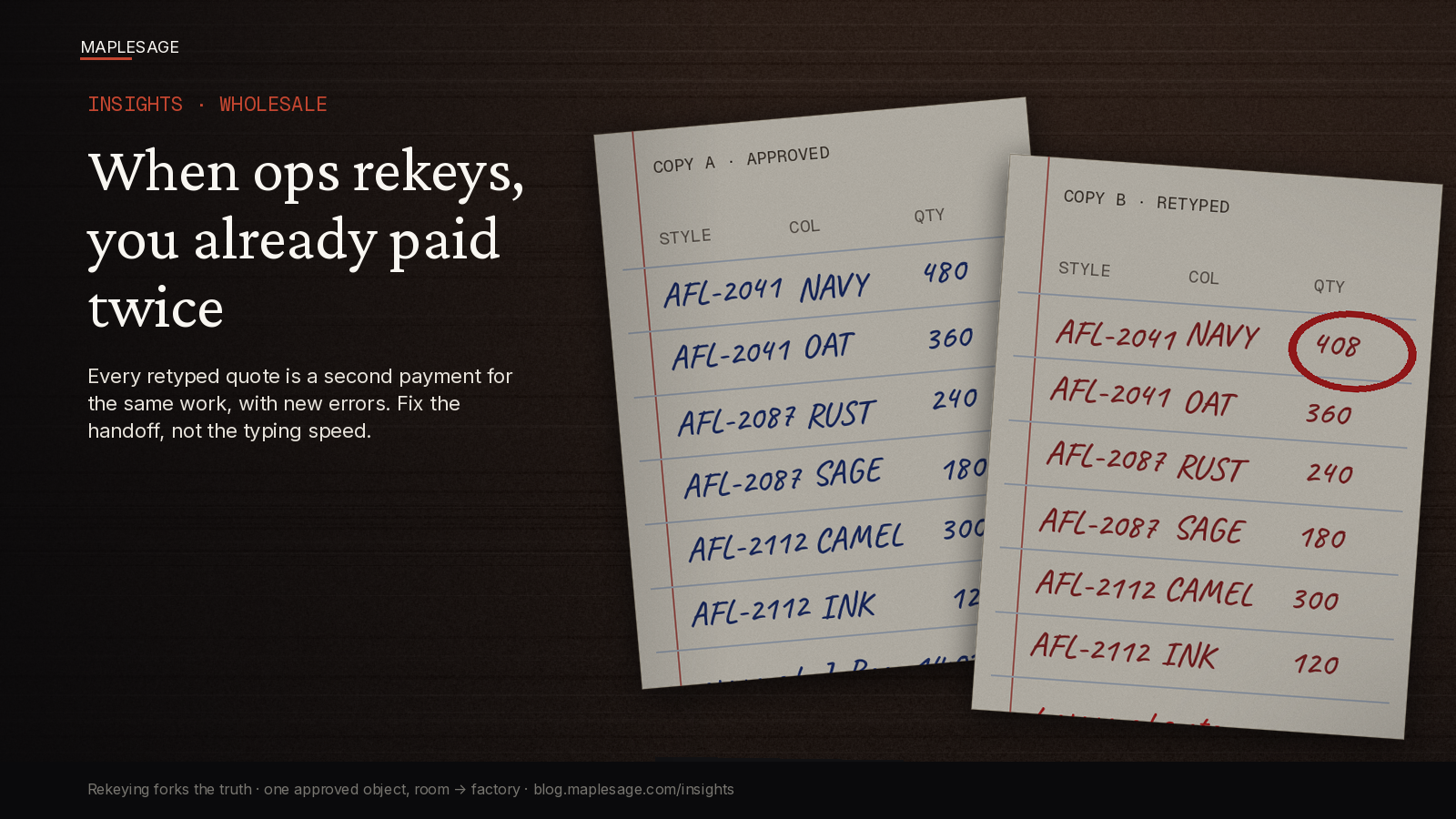
The quote said 480. The sheet ops retyped said 408. Nobody was careless. The system asked a person to copy it.
Most wholesale apparel and footwear brands think of rekeying as a small tax. The sales team builds the quote. The buyer approves it. Then someone in operations opens the ERP, or a production spreadsheet, or the factory’s own PO template, and types it all in again: styles, colourways, size runs, doors, prices, dating, ship windows. It takes an afternoon per big account. It feels like diligence. It is a second payment for the same work.
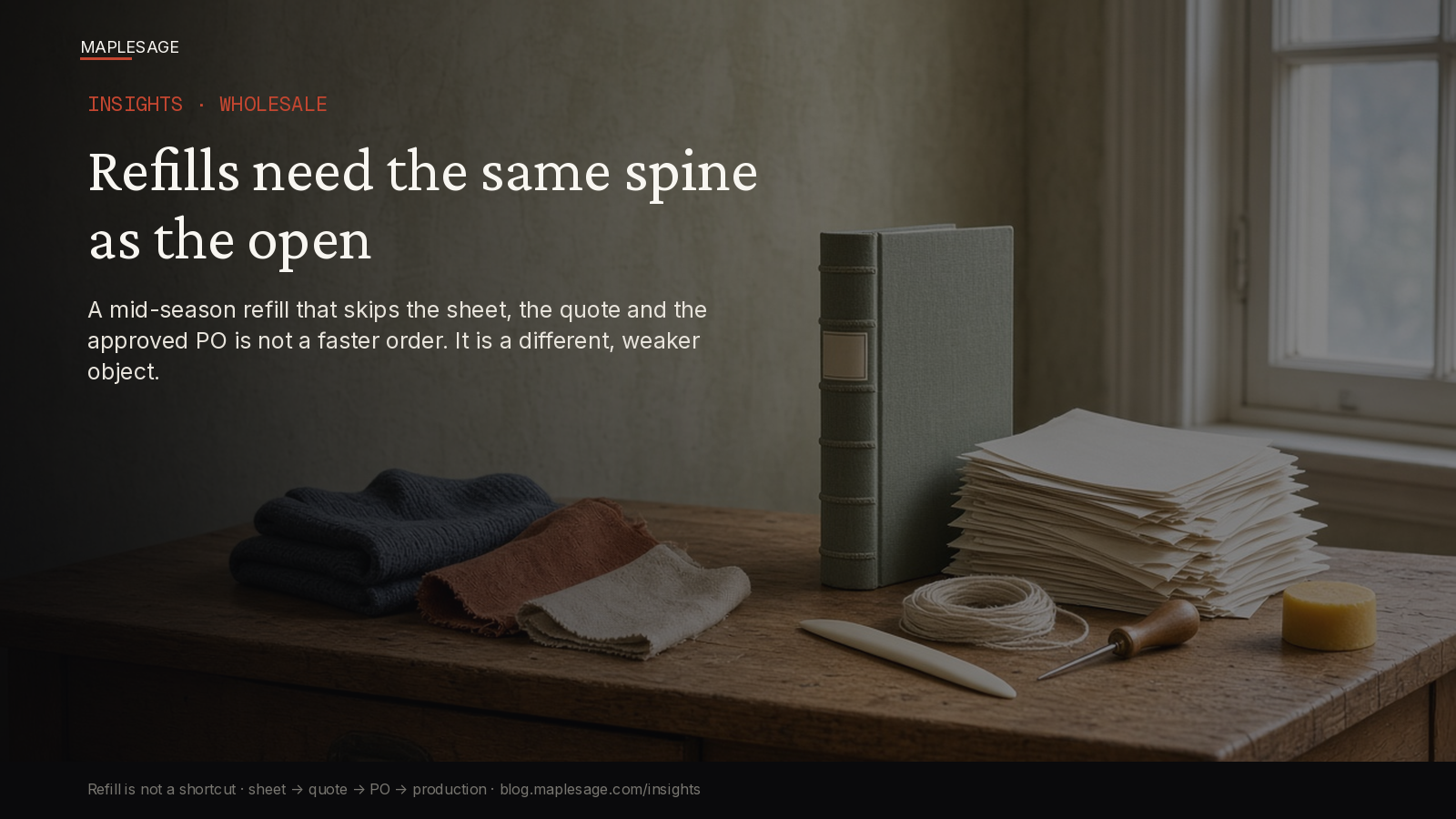
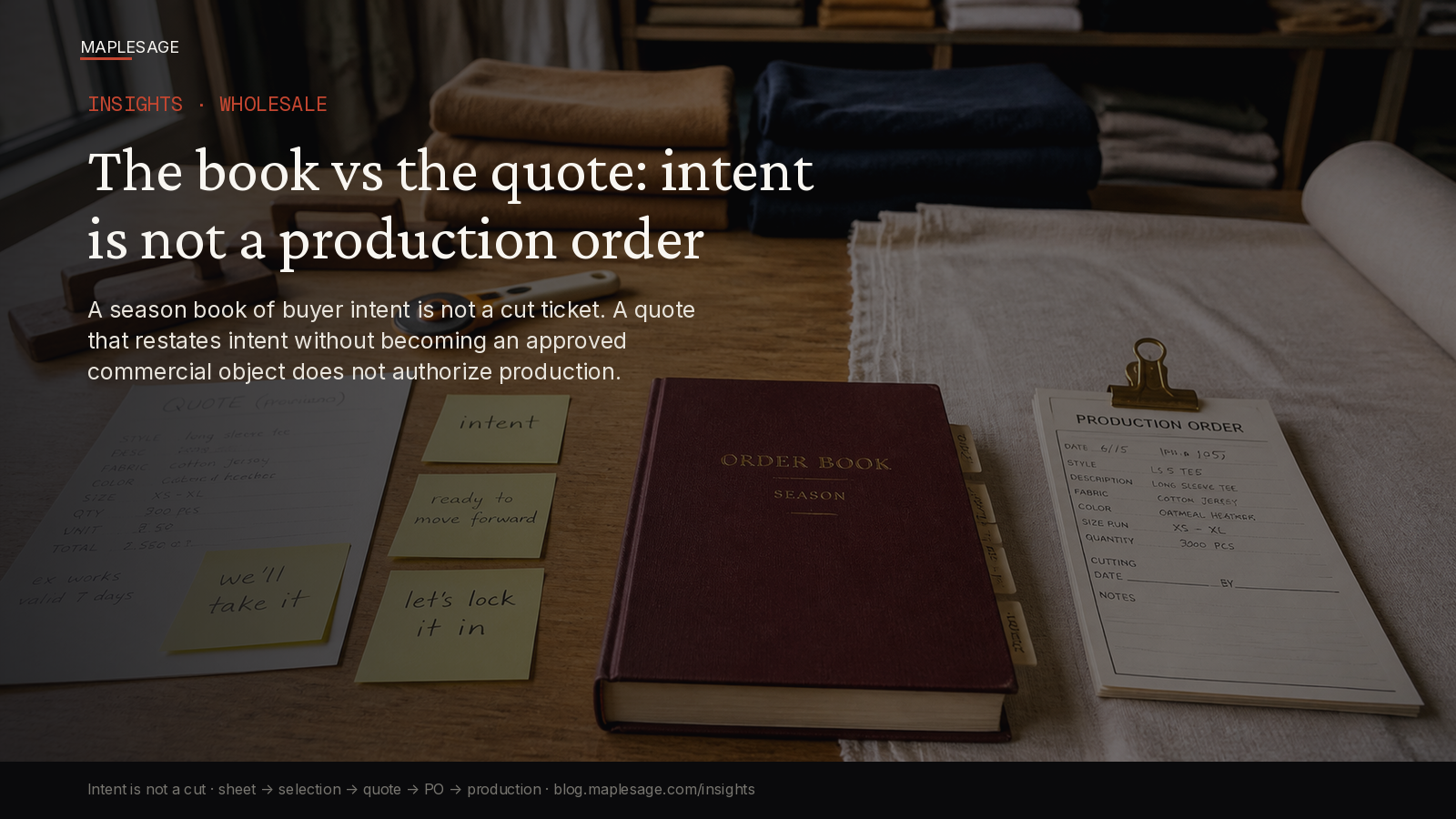
This follow-up sits on the spine: showroom → account-aware line sheet → quote → size/assortment → approved PO → production. Day 4 said the PO is a commercial object, not a file. Day 18 said WhatsApp exceptions that never reach the PO are how the book leaks. Day 30 said intent is not a production order. Day 31 said refills need the same spine as the open. This one is the cost nobody books: every handoff that needs retyping charges you twice.
The first payment is the one you expect
The first payment is the work of building the object. Merchandising and sales choose the assortment, size ratios, doors and prices. Finance checks credit and terms. A named person approves. That is real work, and it is what the buyer is paying for in service and judgement.
The second payment is the one you don’t see
The second payment is the same facts typed again by someone who was not in the room. It has three parts:
| What you pay | What it looks like |
|---|---|
| Labour | Hours of ops time per account per season, spent copying instead of checking |
| Error | A transposed quantity, a wrong colourway code, a missed split ship. One digit is enough to move a cut |
| Delay | The order waits in someone’s queue before it reaches production, and the ship window shrinks |
None of this shows up as a line item. It shows up as “ops is stretched”, “the factory misread it” and “we ate that markdown”.
Rekeying is also where truth forks
Once a quote has been retyped, there are two versions: the one the buyer approved and the one production is running. Every later change (a size swap, a door added, a date moved) now has to be made twice, or it is made once and the other copy goes quietly stale. When the buyer disputes a shipment, nobody can say which copy was right.
This is why the same account keeps producing the same argument. The approval lives on the quote. The cut lives on the copy. The invoice lives on a third thing.
Why smart teams still do it
- The ERP was bought for finance and cannot take a wholesale quote with size runs and door splits.
- The quote tool and the production tool were chosen by different departments in different years.
- The factory has its own template, and the brand adapts to it.
- Rekeying is the only check anyone does, so it feels like control.
Each of these is reasonable. Together they mean the approved commercial object stops at the edge of the sales team, and a person carries it across the gap on foot.
What “one object that travels” means
Not a bigger tool. A rule about what moves.
- The approved quote is the source. Production, finance and the factory read from it. They do not rebuild it.
- Changes are revisions, not edits to a copy. A revised quote has a number, a timestamp and a named approver, and everything downstream picks it up.
- Translation is a mapping, not typing. If the factory needs its own format, the format is generated from the quote. A person reviews the output; they do not author it.
- The check moves to the exceptions. Ops time goes to the lines that look wrong, not to every line.
Where agents fit, and where they don’t
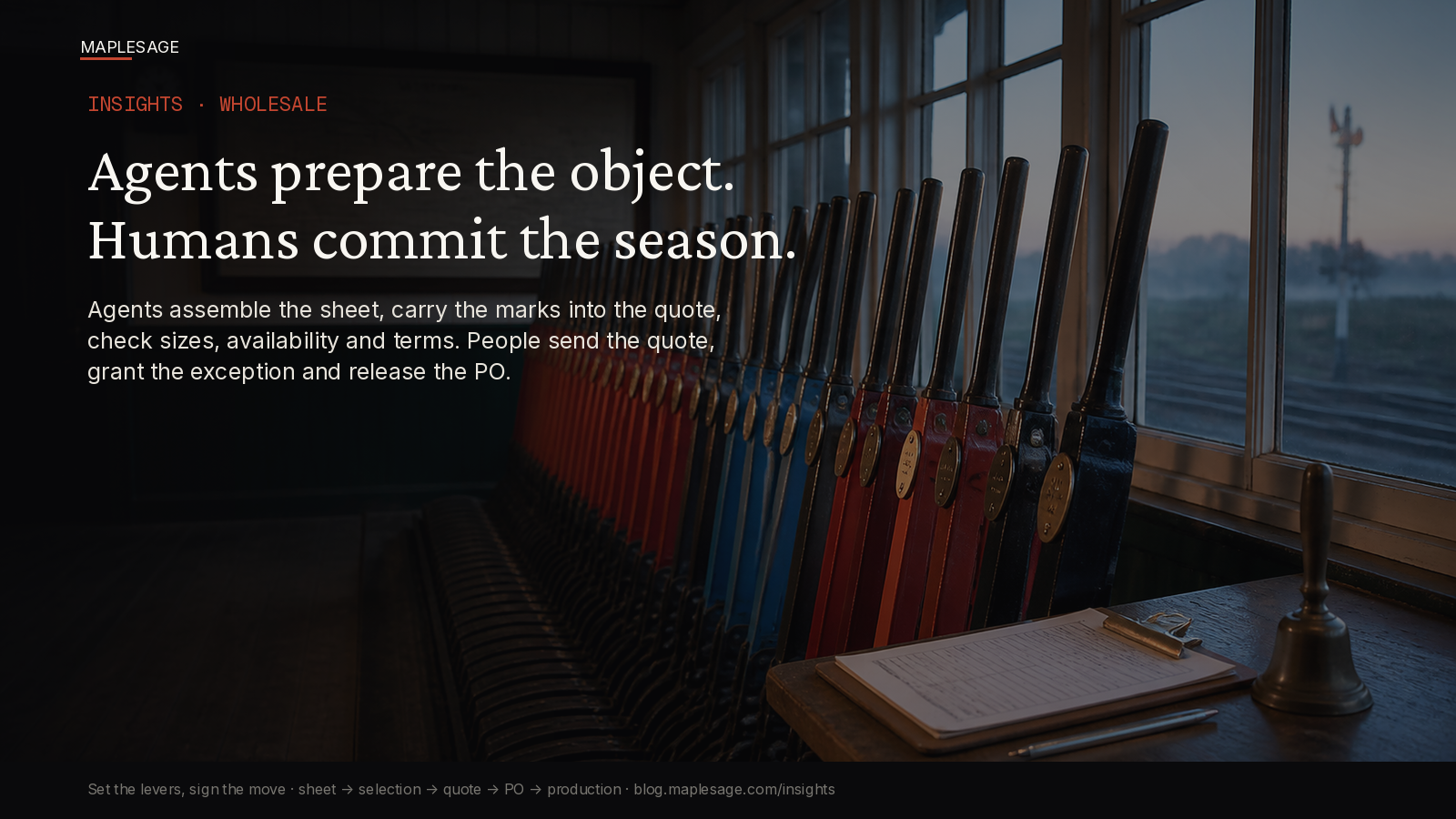
An agent that retypes faster is the wrong product: it automates the second payment instead of removing it. The useful job is to read the approved object, generate each downstream format from it, and flag the lines where the source is ambiguous, such as a size run that does not add up, a door with no ship window, or a colourway code the factory does not know. Humans commit the exceptions. The agent carries the object.
A simple test
Pick your largest account from last season and trace one style.
- How many times were its units typed by hand between approval and cut?
- Can you show which version of the quote each system held on the day of the cut?
- When the buyer changed a size run, how many places did it have to change, and how many did?
If the answers are “three”, “no” and “four, and two”, you paid twice. Probably more.
The close
Rekeying looks like diligence because it is the only control in the gap. Put the control where it belongs: on the approved quote, with one object that moves intact from room to factory. Then ops can spend its afternoons on the exceptions, which is where judgement is worth paying for.
MapleSage Retail-OS is built around that spine: sheet → selection → quote → PO → production.