#Personalization
#fashiontrend
AthleticWear
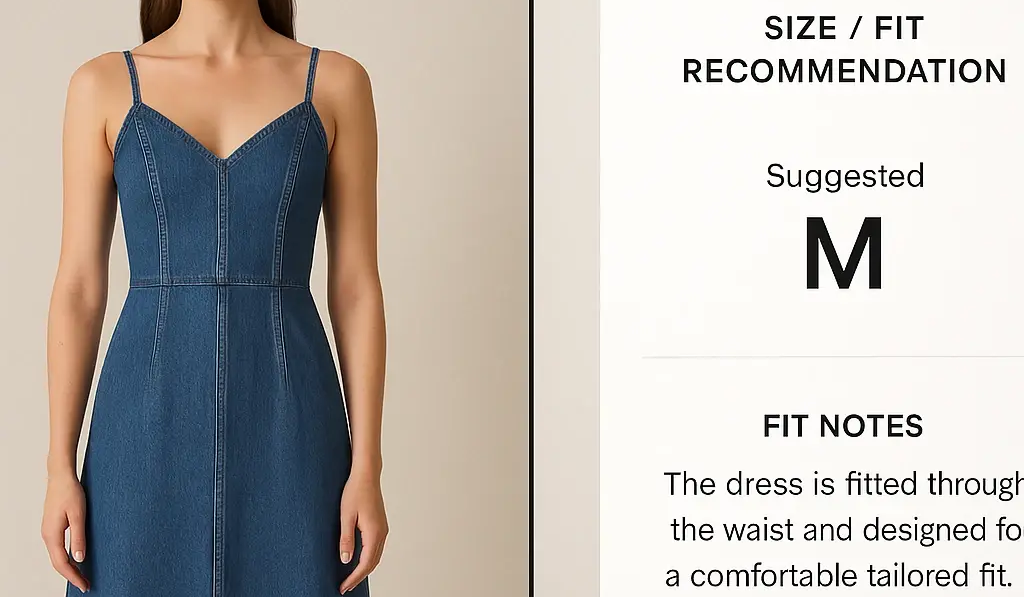

A clear framework to decide when VTO or fit AI reduces fashion returns most.
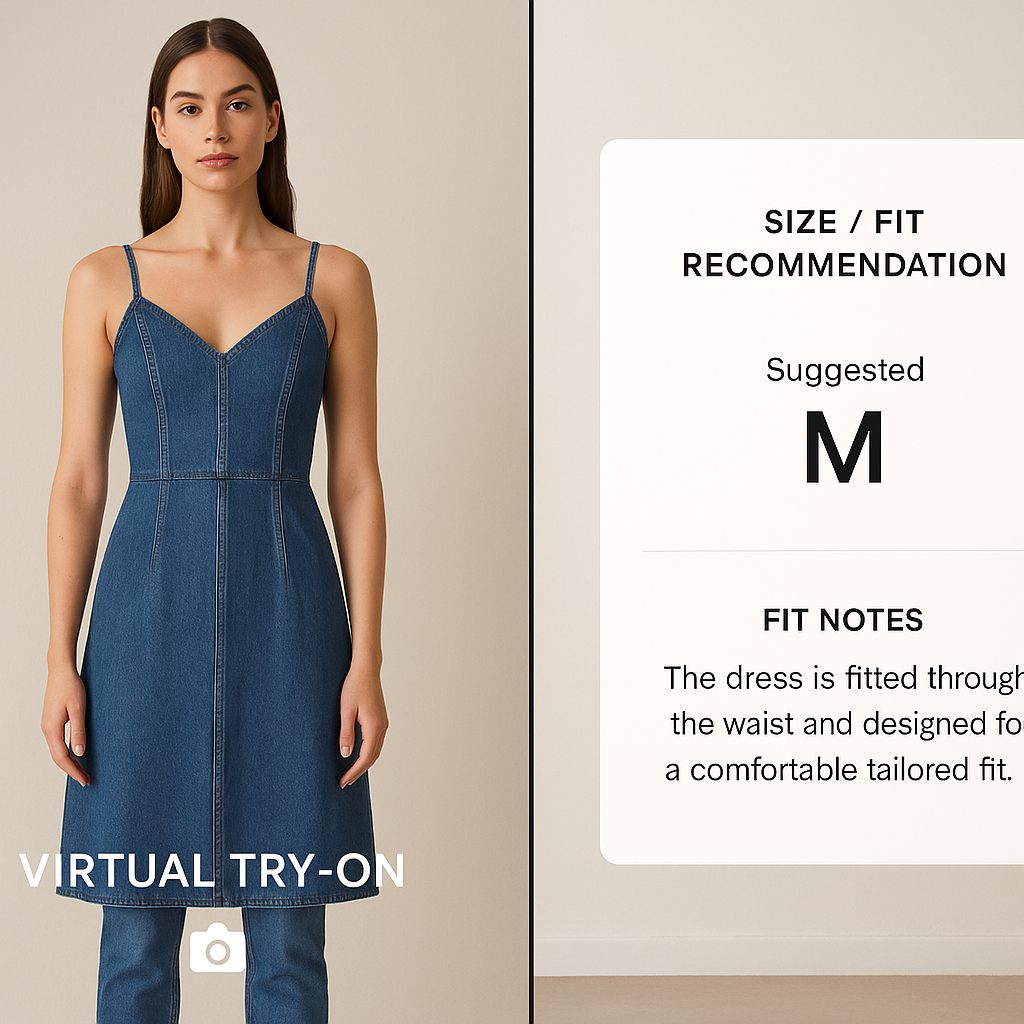
Virtual try-on (VTO) feels magical: upload a photo or use your camera and see the garment on a body like yours. Fit recommendation feels more prosaic: one clear size suggestion with a short reason (“runs roomy; pick 28”). Which one actually reduces returns?
The honest answer: it depends on category, intent, and execution. VTO shines for aesthetics and confidence on silhouette and drape—occasionwear, outerwear, and categories where look on‑body drives the decision.
Fit AI wins for denim, footwear, and tailored pieces where size block and material stretch dictate comfort. The highest ROI often comes from using both—VTO to build desire and resolve “how it looks on me,” and fit AI to settle “which size will be comfortable.” Industry coverage shows rapid VTO progress—especially with generative AI improving realism.
See Business of Fashion. But realism without measurement can disappoint. Retailers experimenting with VTO report mixed outcomes when fabric physics, occlusion (hands, hair), or lighting fail expectations.
Meanwhile, returns remain concentrated in size/fit. Synthesis pieces and vendor studies repeatedly cite fit as the top driver of apparel returns, with online return rates materially higher than in‑store; macro context is summarized in McKinsey’s State of Fashion at McKinsey.
A practical rule: if your customer starts from a vibe and a look (social‑led inspiration), start the journey with VTO or styled on‑body visuals to reduce ambiguity; if they start from a known cut (“your best‑selling straight jean”), lead with fit AI.
Always connect the two: from a VTO experience, surface the recommended size; from a size card, offer an on‑model gallery or VTO to ease aesthetic worries. Done together, you reduce bracketing and second‑guessing.
Design each capability with fashion‑specific data and explainable UX. VTO needs high‑quality imagery, pose handling, and (ideally) fabric behavior hints for drape. Keep expectations honest—label beta features and show a gallery of real customers or models across sizes to anchor reality.
Fit AI needs SKU‑level attributes (pattern blocks, material composition, stretch %, rise/inseam, last/width for footwear) and return‑reason loops.
Feed the model with availability‑aware sales so you don’t learn from stockouts. Emit a single, confident recommendation with a short reason code; reduce cognitive load by flagging redundant sizes in cart.
Wire both into a fashion attribute spine so discovery, PDPs, and emails speak the same language: silhouettes, necklines, lengths, rises, palettes, toe/heel shapes.
Inspiration‑led journeys increasingly start on mobile and social; VTO can lift engagement there if latency is low and the UI is forgiving. A primer on the broader e‑commerce dynamics is Shopify’s fashion summary at Shopify.
For a balanced view of VTO impact and industry skepticism, see an academic/industry review of AI fitting rooms: AI virtual fitting effectiveness. Measurement design is non‑negotiable.
Attribute effects to journey nodes: VTO → PDP → add‑to‑cart → purchase; size card viewed → reduced multi‑size orders → lower return rate. Expect the largest gains in categories with high style ambiguity (dresses, outerwear) for VTO and high fit sensitivity (denim, footwear) for fit AI.
Keep privacy a performance feature: evaluate consent at activation, minimize PII in payloads, and log decisions for audit and optimization.
Prove which approach cuts returns for your assortment. Start with three test cells per category: baseline (no VTO/fit AI), VTO only, and fit AI only; where feasible, add a combined cell.
The brands that harmonize VTO’s inspiration with fit AI’s certainty cut returns without blunt policy changes—and grow loyalty in the process.