How fashion brands turn TikTok-inspired discovery into on-site conversions with visual AI.
Why TikTok-led discovery demands visual and style AI
TikTok and Instagram have quietly become the new front door for fashion discovery. For Apparel, Footwear and Luxury (AFL) brands, that shift is a double-edged sword. On one hand, creator content can generate explosive spikes in traffic and brand heat. On the other, most of that energy evaporates on impact: visitors land on generic PLPs, fumble with search or filters that don’t speak fashion, and bounce before they ever see something that feels like “their” style in “their” size.
To turn social buzz into durable revenue, AFL brands need a TikTok-to-checkout strategy that treats creator content as structured signal, not just media spend. That means wiring visual and style AI into the journey end-to-end: from how you tag products in PLM/PIM to how you route social traffic, assemble style feeds, resolve fit, and measure performance.
At a time when Gen Z and younger millennials are driving much of fashion’s growth, aligning with their visual, social-first shopping behavior is no longer optional. Business of Fashion and McKinsey’s State of Fashion 2025 report notes that younger cohorts increasingly “start and end” their journeys on social platforms, expecting seamless transitions into shopping experiences that reflect the content they just saw BoF x McKinsey.
For MapleSage’s AFL ICPs—Fashion CMOs, E-commerce Directors, CX leaders, and CTOs—the opportunity is to turn that expectation into a measurable advantage. Visual AI can map creator content to your product catalog; personalization engines can assemble responsive “inspired by” feeds tuned to silhouettes, palettes, and price bands; fit AI can reduce the bracketing and returns that plague social-led cohorts.
Together, these capabilities transform scattered influencer activity into a coherent, AI-powered acquisition and loyalty engine. Critically, this is not about replacing human taste. Creators, stylists, and brand teams still define the aesthetic and storytelling; AI makes those choices shoppable at scale, in real time, for hundreds of thousands of micro-audiences.
The rest of this post walks through how to design those TikTok-to-checkout journeys, how to make them explainable and segment-specific across fast fashion, contemporary, luxury, and athletic wear, and how to prove—numerically—that they lift conversion, AOV, and retention instead of just vanity metrics.
Designing TikTok-to-checkout journeys with visual and style AI
When a TikTok or Instagram Reel sends a shopper to your site, they don’t arrive with a SKU in mind—they arrive with a mental image: a wide-leg trouser in espresso, a satin camisole with skinny straps, a particular sneaker profile they just saw on a creator.
Traditional fashion search, built around keywords and flat categories, forces that shopper to translate vibe into clumsy text. Visual and style AI let you skip that translation step by letting customers shop with pictures, silhouettes, palettes, and occasions instead of product codes.
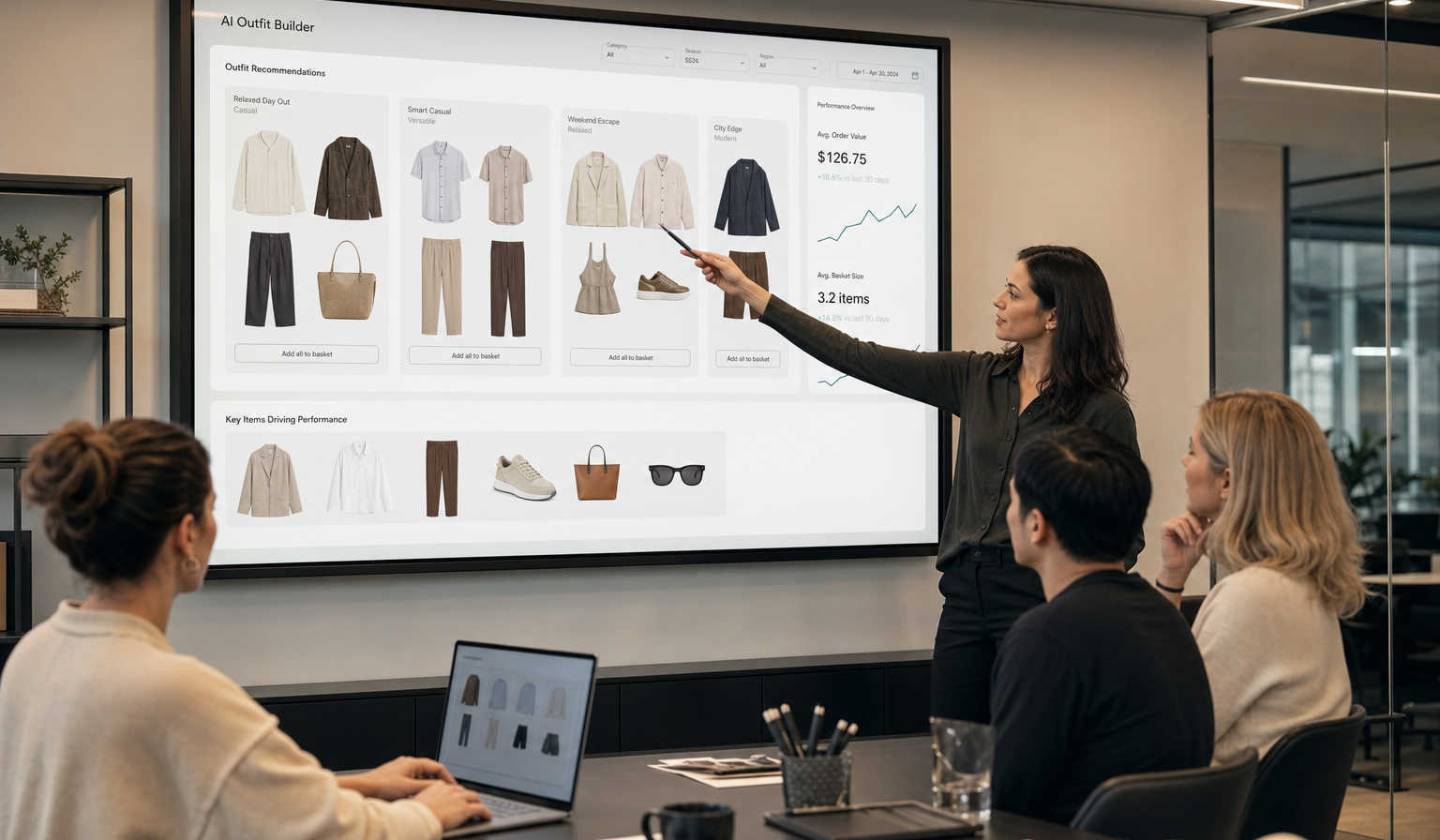
The TikTok-to-checkout journey starts the moment a user taps your link-in-bio or TikTok Shop listing. Instead of landing them on a generic PLP, route creator traffic to a style feed that mirrors what they just saw: the hero look, close variants in price and palette, and capsule suggestions that feel like the creator’s wardrobe—not a random catalog.
Platforms like Shopify highlight how social commerce and mobile-first shopping now dominate fashion e-commerce, with TikTok Shop quickly becoming a discovery and purchase channel in its own right Shopify. Under the hood, this requires a fashion-grade product spine and an AI layer that can interpret creator content. Visual AI can scan influencer posts and campaign assets to extract structured attributes—necklines, lengths, heel shapes, palette families, fabric finishes—and map them to your PIM. Providers like
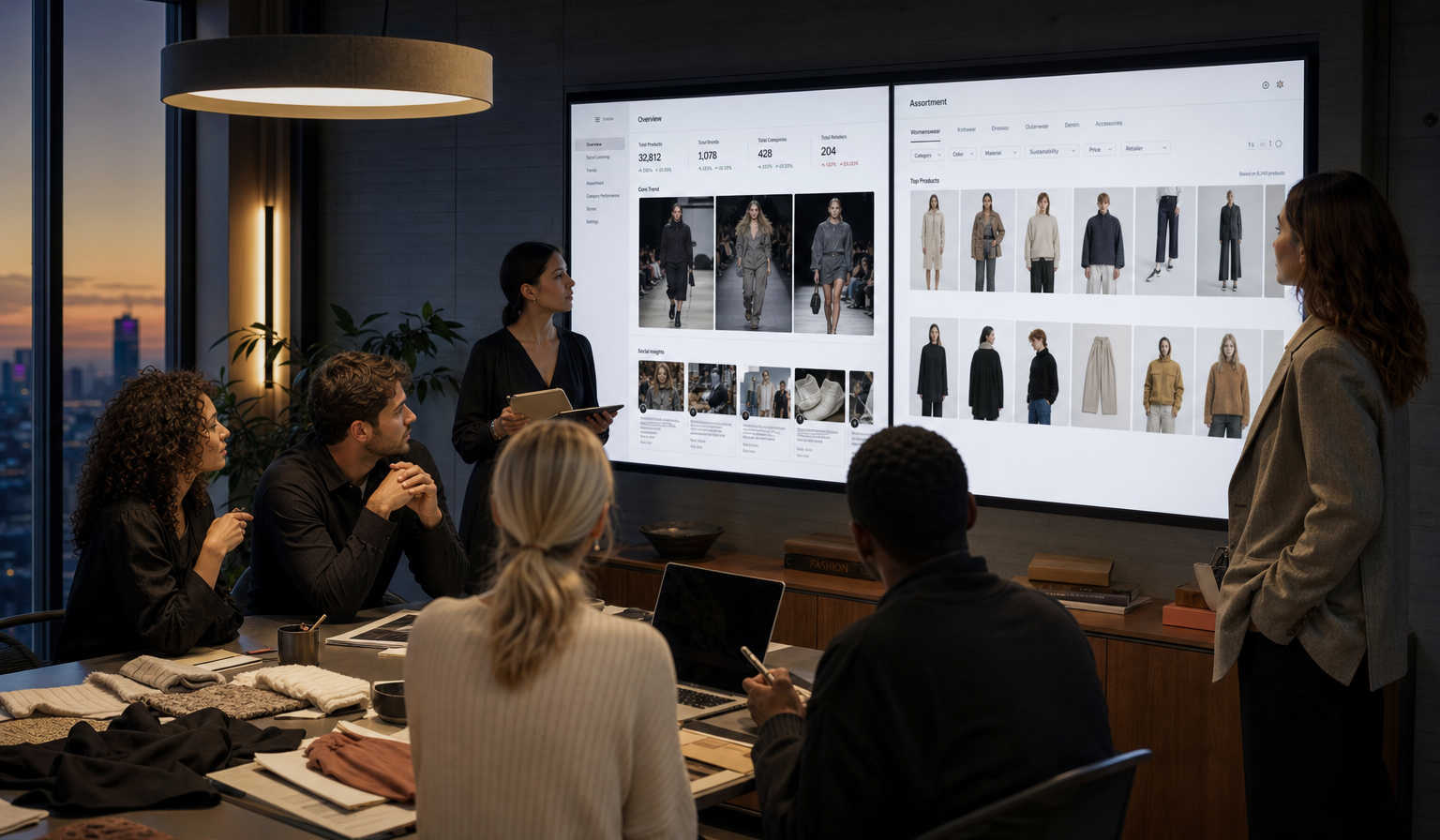
Heuritech show how runway and social images can be turned into trend signals for buyers; the same mechanics apply at the on-site level when you want to build “Inspired by this look” feeds Heuritech.
Once your product catalog is tagged with silhouettes, fabrics, and palette families, AI can group shoppers into style clusters based on the creator content they arrived from and what they click once they land. A user who taps three espresso-toned tailoring looks should see different recommendations from one gravitating toward pastel satin dresses— even if both came from the same Reel. For Gen Z, who overwhelmingly describe their fashion discovery as image-led and social-first, this kind of responsive style feed feels natural, not novel.
Business of Fashion and McKinsey’s State of Fashion analyses underline how important this cohort is to growth and how strongly they gravitate toward social-first shopping patterns BoF x McKinsey.
Across segments—fast fashion, contemporary, luxury, athletic—the right balance of editorial curation and AI automation will differ. Luxury brands may want fewer SKUs on the page, stronger palette discipline, and concierge options like reserve-in-boutique.
Contemporary and athletic brands can surface more options faster, leaning into price transparency and performance cues. What stays constant is the need for explainability: every “Inspired by TikTok” block should carry a short, brand-true reason code, such as “same column silhouette and satin finish as the look you tapped,” so merchandisers trust the system and shoppers understand why they’re seeing specific pieces instead of others.
Measuring TikTok-to-checkout impact and AI ROI
Social-led discovery only matters if you can prove it moves revenue and margin. For AFL leadership, that means building a scoreboard that links TikTok and Instagram campaigns to on-site performance in ways a CFO will respect.
At the journey level, track session metrics for social cohorts separately from other traffic: how often do visitors who land from creator links or TikTok Shop open your visual feed, use the camera icon for visual search, or scroll past the first few rows? What is their feed-to-PDP rate compared with search-led visitors, and how quickly do they add a first item to cart on mobile? These metrics reveal whether your visual AI is narrowing choice or overwhelming people. Outcome KPIs sit one level down.
Measure conversion rate and AOV for TikTok-driven sessions where visual and style AI blocks are visible versus holdout traffic that sees traditional PLPs. Attribute “change-of-mind” returns—the ones caused by expectation gaps rather than defects—by cohort to see whether better visual matching and fabric/fit cues reduce refunds and increase exchanges.
External benchmarks from Baymard and Shopify show fashion return and cart abandonment rates outpacing other verticals; using AI to correct fit and expectation gaps is one of the few levers that attacks both problems at once Baymard, Shopify. Then link this back to creator economics.
For each influencer or TikTok concept, compare not just swipe-up or click-through rates but downstream retention: repeat purchase, subscribe-to-buyer conversion, and list growth among the shoppers they attract. Style AI makes this easier by clustering shoppers based on silhouettes, palettes, and occasions rather than one-off SKUs, so you can see which creators actually introduce enduring style tribes to your brand.
On the implementation side, fashion CTOs and digital leaders should treat this as a stack conversation, not a one-off widget. You need PLM and PIM feeding a clean attribute model into your storefront; a visual AI layer that can interpret creator imagery; and a personalization engine that can assemble responsive style feeds in under 300 ms on mobile.
Architectures built around Shopify Plus, modern PIMs (Centra, Pimberly, Catsy), and an AI orchestration layer like SageRetail are already proving this pattern in market. The upshot: your next TikTok spike doesn’t just create a short-lived sell-out on one SKU—it seeds months of high-intent, style-led journeys you can measure and scale.