Inclusive on‑model visuals with fit UX lift conversion and reduce returns. Fashion buying is visual—and personal. Shoppers don’t just ask “Is this my style?” They ask “Will this flatter my body and feel comfortable for hours?”
Why on‑model diversity boosts fashion conversion
When a PDP answers with inclusive on‑model visuals and calm, explainable fit signals, hesitation drops. Conversion rises, bracketing shrinks, and returns fall. In 2025’s uneven demand, that’s margin you keep.
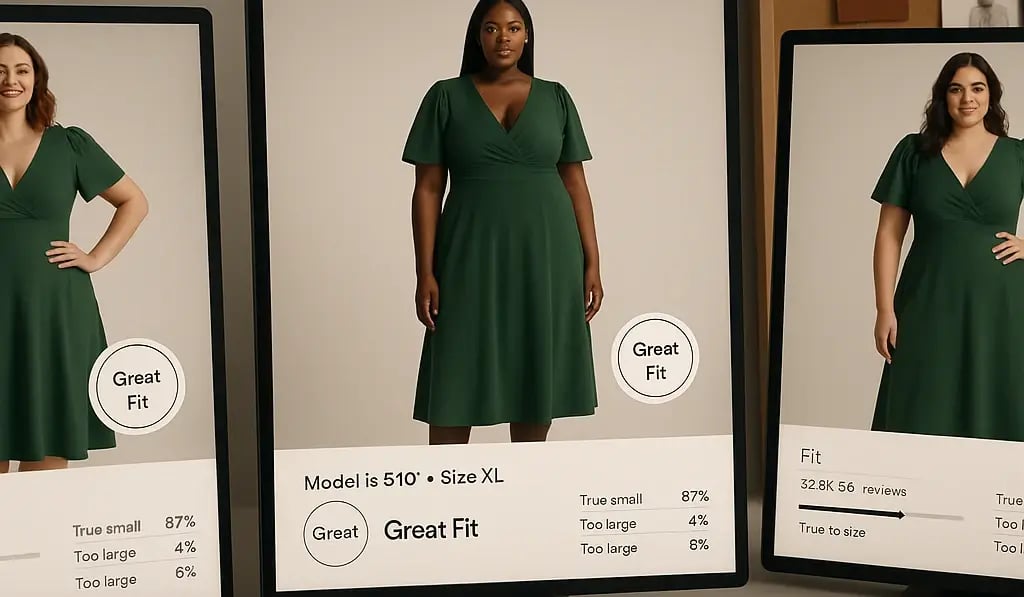
Begin with on‑model diversity that matches your customer base. Show the same garment on multiple bodies and tones, and include short video to reveal drape and sheen—especially important for satin, crepe, and knits. Then make fit confidence explicit: a single, clear recommendation above the fold with a concise reason code, carried into cart where duplicate sizes are gently flagged. Pair with a review module that includes a fit subscore and filters to see feedback from shoppers with similar measurements.
For evidence‑based patterns that consistently pay on PDPs, see Baymard. Next, connect visuals to data so explanations stay honest. Ingest SKU‑level attributes—pattern block, rise/length pairings, fabric composition and stretch %, and for footwear, last shape and width—so badges aren’t guesswork. Use the same attribute spine to assemble a tasteful “shop the look” strip that completes outfits in a way that reflects the shopper’s style profile, not generic cross‑sells.
Industry outlooks continue to emphasize that personalization and reduced uncertainty are key levers for fashion profitability; for macro context, review State of Fashion 2025. For mobile and discovery realities, see Shopify.
Design fit-first PDPs with inclusive visuals
Build the page like a stylist’s proof, not a spec sheet. Inclusive, on‑model photography across sizes and skin tones reduces uncertainty about silhouette and drape—especially in categories like dresses and occasionwear where aesthetics decide.
Pair visuals with fit signals that speak fashion: a single recommended size with a short reason code (“runs slightly roomy”), a fit subscore in reviews (“runs small/true/large”), and quick pivots that mirror common trade‑offs (“longer hem,” “lower heel,” “more coverage”).
Evidence‑based UX research consistently shows that on‑model images, detailed photography, and clear sizing information drive confidence and conversion; see Baymard, and footwear specifics at Baymard Footwear UX. Keep the data model fashion‑grade so explanations are honest.
Encode pattern block, rise/length combinations, fabric composition and stretch %, and for footwear, last and width—so size badges aren’t generic.
Treat photography as data: tag finish (satin/matte), drape, strap width, and hardware tone so “shop the look” strips match taste and reduce “change‑of‑mind” returns.
The macro case for getting this right is clear in fashion’s 2025 outlook—uneven demand and value‑seeking behavior reward brands that reduce uncertainty at the PDP; review State of Fashion 2025.
For commerce context on visual discovery and mobile behavior, see Shopify. Tone matters by segment. Luxury requires editorial restraint, premium lighting, and concierge hooks (reserve in boutique, alterations).
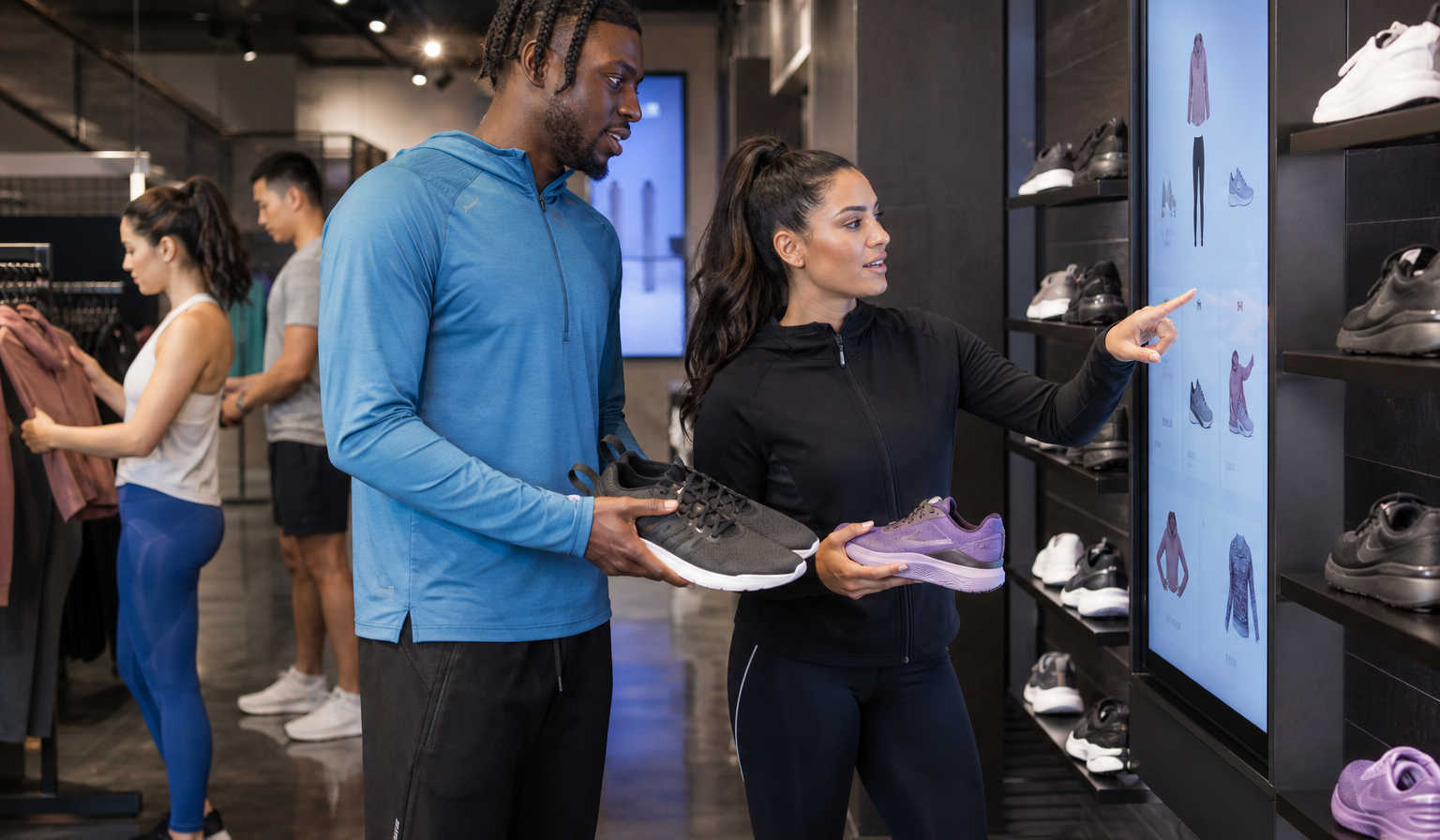
Contemporary can be energetic and budget‑aware; athletic should use performance cues (fabric weight, breathability) and capsule logic (top + bottom + sneakers + cap).
Always keep accessibility first—accurate alt text, contrast, and keyboard navigation—so inclusivity reads in content and code.
Operate with KPIs, experiments, and brand tone
Operate the PDP like a measurable product. Define outcome KPIs at the journey nodes your changes influence: PDP view‑to‑add rate; time‑to‑first‑add on mobile; attach rate from “shop the look”; units per transaction; multi‑size order share; and return‑rate delta on orders influenced by size badges and inclusive visuals.
Attribute effects to shoppers who actually saw the elements, not channel aggregates. Pair these with technical SLOs: P95 <300 ms for recommendations/outfits, image decode budgets that preserve fabric detail, and low error rates.
Experiment with discipline. Start where fit sensitivity is highest—denim, dresses, and sneakers. Prefer randomized control at session or user level; otherwise, use matched cohorts with pre‑registered stop‑loss thresholds (bounce spikes, save‑rate dips).
Test levers singly and in combination: on‑model diversity expansion, video snippets for drape and shine, the presence and copy of size badges, and review fit filters.
Publish weekly readouts that reconcile incremental revenue and reduced reverse‑logistics costs with creative and integration spend. Governance and privacy are performance features.
Evaluate consent at activation for any personalized block; minimize PII in payloads; log inputs and reason codes for each recommendation to aid audits and care.
Use macro references in leadership decks to maintain urgency and alignment—fashion’s economics in 2025 reward precision and inclusivity: State of Fashion 2025. For PDP best practices that repeatedly test well in apparel and footwear, rely on Baymard. Inclusive visuals plus fit UX create confident baskets—especially on mobile.