#Personalization
#fashiontrend
AthleticWear
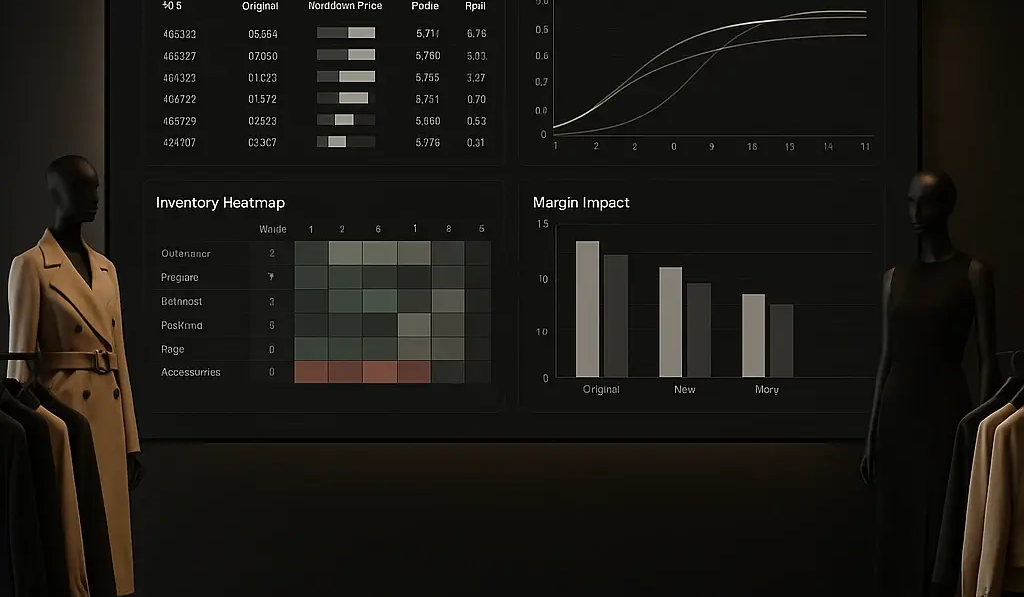

How AI-driven markdowns lift full-price sell-through and protect fashion margins.
Markdowns are a double-edged sword in fashion. They clear inventory—but they also train customers to wait, compress margin, and muddy brand positioning if overused. The problem isn’t discounting per se; it’s blunt, calendar-driven tactics that ignore SKU elasticity, trend momentum, and local demand. In luxury and contemporary, poorly timed markdowns dilute equity; in fast fashion, they mask assortment misses and inflate return habits.
AI shifts markdowns from a last‑resort clearance to a calibrated lever—pricing different SKUs differently based on their observed and predicted sell‑through, size curves, and micro‑trend signals. Industry reporting and vendor case studies show margin lift when retailers move beyond one‑size‑fits‑all discounts.
A luxury fashion brand saw profit improvement after adopting AI‑driven markdowns tuned to SKU‑level demand and lifecycle; see Peak AI case study.
Macro outlooks from McKinsey’s State of Fashion continue to press for agility and data‑driven merchandising as volatility persists; review McKinsey State of Fashion. The core takeaway: price is a creative decision as much as a mathematical one in fashion—use data to protect storytelling while achieving sell‑through.
The practical win is precision. Instead of a flat 30% at season’s end, tune marks to elasticity by style, colorway, size, and region. Keep hero items at full price longer; accelerate long‑tail variants in markets where the trend is fading. Connect price moves to marketing and site merchandising so new prices get seen by the right cohorts without cheapening the whole grid.
Build the capability with signals and guardrails fashion teams trust. Signals: availability‑aware sell‑through (correct for stockouts), size curve velocity (which sizes stall), local trend momentum (search/social signals, sell‑through velocity by region), product attributes (silhouette, fabric, palette), competitive benchmarks, and weeks to next drop.
Use category context—outerwear behaves differently from dresses; footwear fit profiles alter demand curves. Guardrails matter for brand and finance. Define minimum advertised prices for luxury, guard maximum markdown depth by tier (core vs. fashion vs. test), and cap cadence to avoid customer conditioning. Keep explainability: attach reason codes for each recommendation (e.g., “tail sizes slow in TX; trend fading; 2 weeks to drop”), so merchants can accept or override with confidence. Wire this into the merchandising stack.
Event streams carry sell‑through, inventory, and campaign responses; your product spine must expose the attributes used to compute elasticities and cohort response. Trend inputs can come from platforms tracking visual and search signals; see overviews from tools like Trendalytics and Heuritech. With these joins, price decisions reflect real taste movement—not just a calendar.
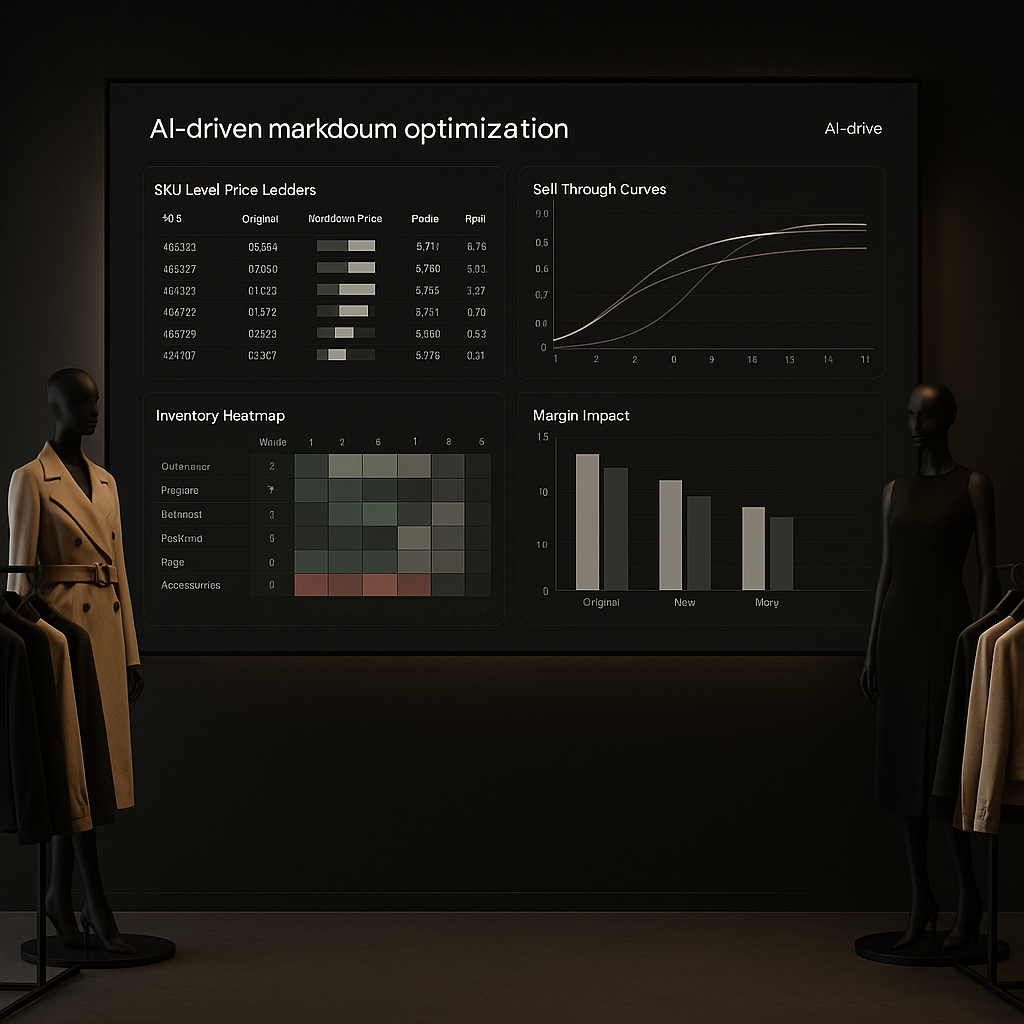
Operate markdown optimization with CFO‑ready evidence. Scoreboard: gross margin rate, full‑price sell‑through, weeks of supply, markdown rate and depth by cohort, and inventory recovery (cash flow).
Attribute at the SKU/category level and by region. Run staircase rollouts: start with one category in two markets; use randomized store/site cohorts or matched tests with stop‑loss thresholds; expand once lift is stable. Seasonality deserves its own playbooks.
Pre‑season, simulate mark scenarios under multiple trend trajectories and size curves. In‑season, refresh recommendations weekly (or faster for fast fashion) and coordinate creative so price changes have visibility without whiplash.
Post‑season, analyze which attributes predicted stalls and feed that back into buy plans. Keep privacy and reliability first‑class: evaluate consent at activation for any customer‑facing messages, treat models and rules as deployable artifacts with rollback, and instrument observability from signal to price change to sell‑through.
For additional strategy context on merchandising under volatility, see McKinsey’s fashion outlook at McKinsey. With disciplined experiments and brand guardrails, AI‑guided markdowns protect margin while keeping your aesthetic intact—so customers remember the collection, not the clearance.