#Personalization
#fashiontrend
AthleticWear
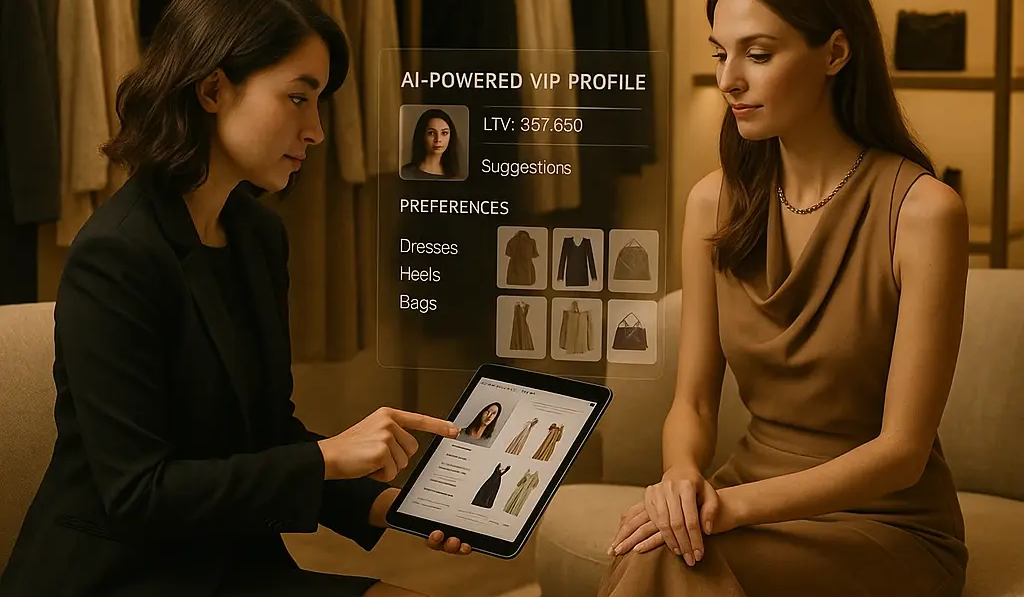

How AI-enhanced clienteling elevates VIP styling, LTV, and loyalty in luxury fashion.
Clienteling has always been the luxury differentiator—knowing a client’s taste, size nuances, and lifestyle moments, then curating pieces before they ask. What’s changed is scale and speed. VIP expectations are set by instant, visual, mobile-first experiences, and assortments refresh monthly. AI doesn’t replace human stylists; it augments them with memory, timing, and taste scaffolding so every touch feels anticipatory and brand‑correct.
The result is higher lifetime value (LTV), stronger retention, and a calmer returns profile because recommendations match both style and fit. AI-enhanced clienteling turns scattered notes into a living style graph. Inputs include declared preferences (tailoring, palettes, silhouettes), history across channels (boutique, e‑comm, private appointment), size/fit intelligence by brand and block, event signals (travel, weddings, award season), and availability.
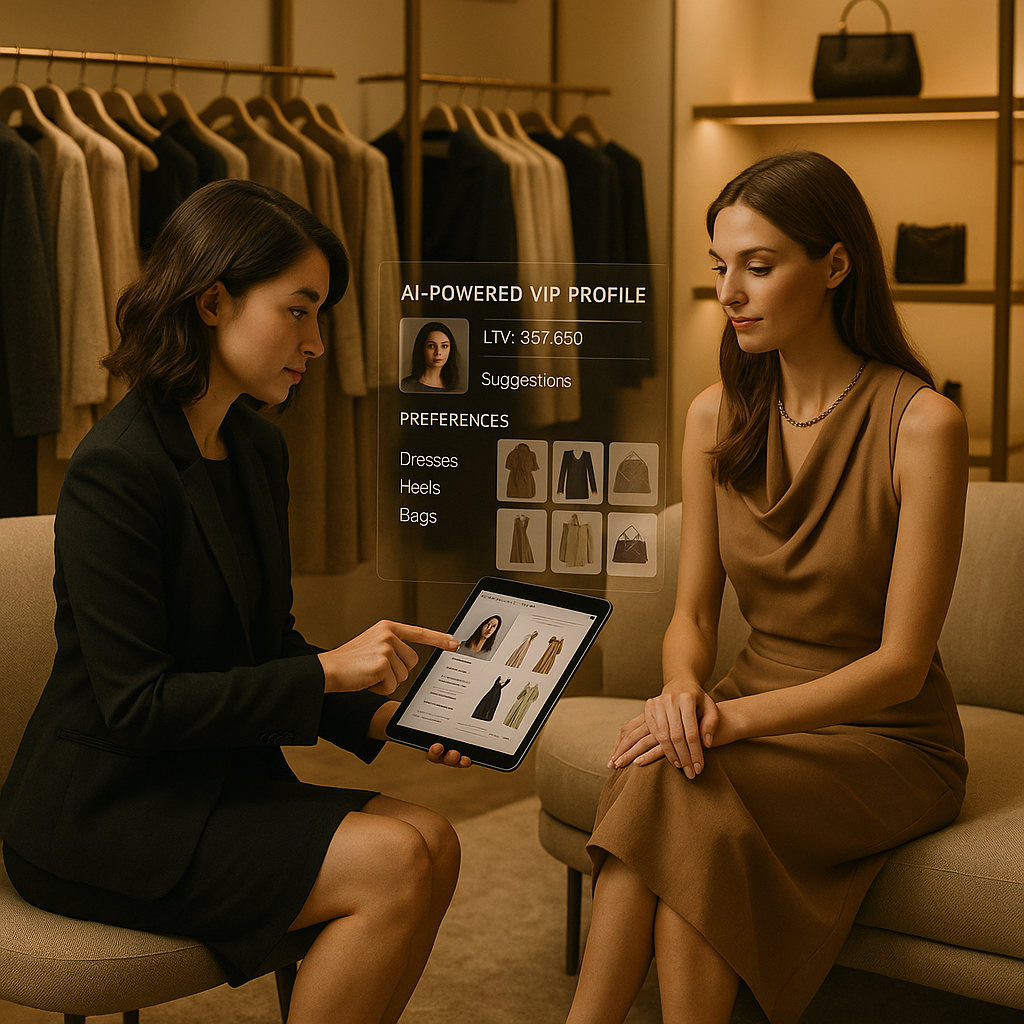
With this, stylists see a concise profile—preferred silhouettes and lengths, heel tolerance, favored designers, price bands, and “never send” items. Suggestions stay on‑aesthetic and on‑size, and stylists can preview upcoming deliveries to reserve pieces for key moments. Public overviews show how visual trend signals and social‑to‑shop behavior influence demand pacing; see Heuritech. Macro context on luxury’s digital evolution and personalization emphasis appears in the BoF x McKinsey State of Fashion.
The modern client book is a consent‑aware, explainable profile plus a concierge UI. Foundations:
• Identity that stitches boutique visits, e‑comm, appointments, and after‑sales.
• Consent and preferences as runtime controls—evaluated at the moment of outreach.
• A fashion attribute spine (silhouettes, rises, lengths, toe/heel shapes, fabrics, palettes) shared by merch, styling, and digital.
• Size/fit intelligence per brand/last to prevent misfires that lead to returns. Concierge UX patterns:
• Lookbooks per client with 6–12 pieces styled into two or three outfits—tappable alternates maintain optionality without overwhelm.
• Occasion prompts (“Capri in July,” “black‑tie in Paris”) that re‑rank suggestions.
• Private links to reserve, book a fitting, or request tailoring; persistent context when clients move from chat to boutique.
• Visual search from client photos to find close matches and build a look around a cherished piece.
Guardrails protect brand equity. Stylists should set aesthetic bounds; AI proposes within them and explains why (“paired for column silhouette and satin finish”). Privacy is a performance feature—minimization reduces payloads and keeps conversations personal, not intrusive. For a high‑level software perspective on clienteling, see a platform overview like Salesforce.
Prove that clienteling 2.0 compounds value. KPIs:
• LTV lift and 12‑month retention for clienteled cohorts vs. baseline.
• Appointment‑to‑purchase rate and average basket breadth (AOV, UPT).
• Return rate delta on clienteled purchases (fit/style alignment reduces bracketing).
• Share of sales from previews/private appointments and special orders.
Operating cadence:
• Weekly pipeline reviews: who needs outreach this week and why (events, deliveries, wishlists).
• Stylists publish short notes that become structured signals (preferred inseam, heel comfort) to improve future picks.
• Freshness SLAs for new arrivals so VIPs can reserve before public launch.
• Progressive delivery and canary rollouts for new recommendation policies; deployment patterns summarized by HashiCorp.
• Observability: trace from signal to outreach to outcome; executive primer on why this matters: Splunk.
Done well, AI becomes the stylist’s quiet superpower: better timing, fewer misses, richer storytelling—and a VIP experience that feels handcrafted, not automated.