#Personalization
#fashiontrend
AthleticWear
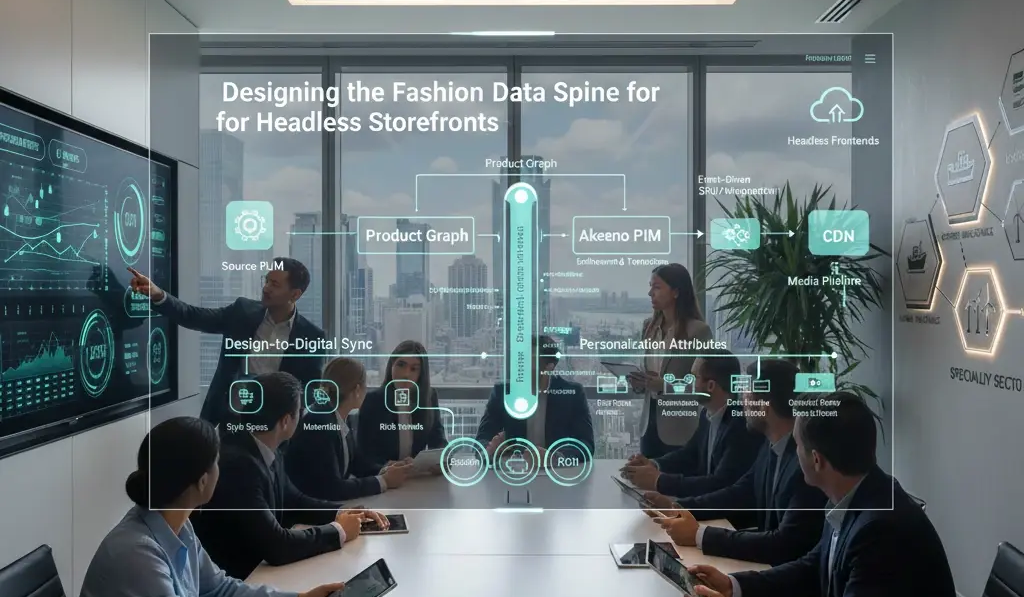

Headless wins in fashion only when PLM/PIM feed a clean product spine to the storefront. Many fashion brands pursue headless commerce for speed and creative freedom—then stall when product data, style attributes, and media workflows don’t keep up. The root cause isn’t the storefront; it’s the data spine.
Fashion requires granular attributes (silhouette, rise, wash, fabric, stretch %, last shape, embellishment) and rich media that evolve from design room to PDP. If headless is decoupled but your PLM and PIM aren’t wired in, teams end up copying specs by hand, losing attribution, and delaying launches. Headless is a valid architectural choice—especially on Shopify Plus—but it should be paired with an integration plan that keeps design‑to‑digital in sync. For platform context, see Shopify Plus headless and an enterprise primer on headless concepts Shopify: What is headless. On the product side, PLM systems like Centric manage the source of truth for style specs, materials, and approvals; see Centric: What is PLM and Centric Fashion PLM. A PIM such as Akeneo enriches channel‑specific copy, translations, and media; example integration primers abound, e.g., Shopify + Akeneo PIM. Without these joins, headless projects become content bottlenecks: variant images mismatch, size guides drift, and personalization lacks the attributes needed for style‑aware recommendations. For CTOs, the remedy is architectural: make PLM the upstream source for technical attributes; let PIM handle customer‑facing enrichment; and feed a consistent product graph to the headless storefront via APIs.
Design the spine first, then the screens. • Entity model: Define a fashion‑specific product graph—style → colorway → size—plus fit blocks, materials, and care. Include attributes used by personalization (silhouette, rise, sleeve, last, stretch) and by search/filter. • Integration pattern: Event‑driven where possible. When a style reaches a PLM milestone (design approved, BOM finalized), publish events that trigger PIM record creation and storefront pre‑builds. Keep a canonical SKU/variant ID across systems. • Media pipeline: Map how imagery flows from studio to PIM to CDN to headless front ends, including alt text and accessibility metadata. Automate variant image assignment. • Personalization and search: Ensure your spine exposes the attributes needed for visual and style‑aware recommendations and for faceted search. Headless wins only if discovery is great on day one. • References and primers: Platform resources explain the mechanics of headless storefronts (e.g., Shopify headless guide) while PLM vendors outline product data governance (e.g., Centric: PIM vs. PLM). Tie them together in your blueprint so designers, developers, and merchants share one product language.
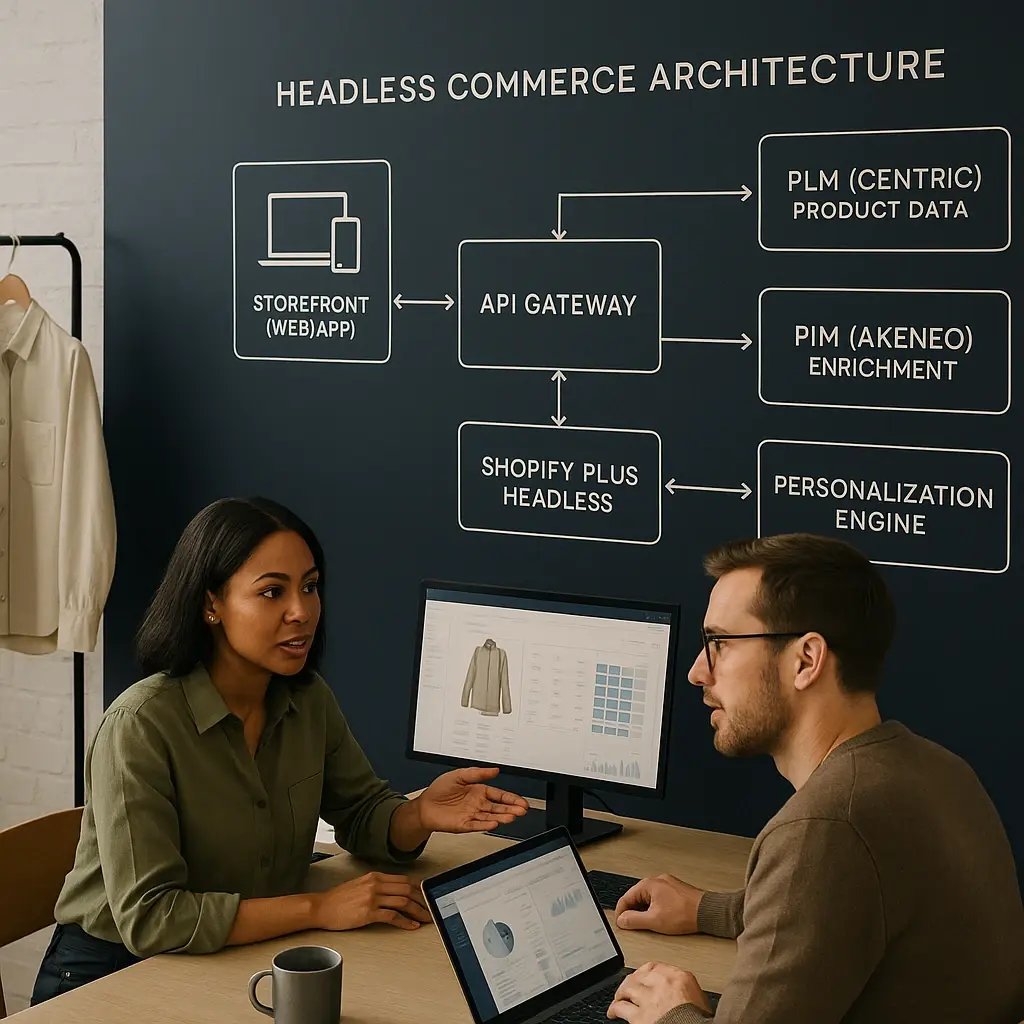
Operate with a rollout plan and KPIs that de‑risk the move. • Scope: Start with one category (e.g., denim) and one region. Mirror the full design‑to‑digital flow: PLM spec → PIM enrichment → headless storefront build → personalization powered by attributes. • KPIs: Track time‑to‑publish from PLM approval to PDP live, product data defect rate (missing images, wrong attributes), search/filter success, add‑to‑cart rate, and engineering cycle time. • Reliability and governance: Version your product schema; use contract tests between PLM, PIM, and storefront APIs. Instrument observability end‑to‑end and set freshness SLAs—if PLM updates propagate within 15 minutes, state it and monitor. Maintain a decision log for schema and mapping changes. • Change management: Train merchandisers on attribute hygiene. Make engineering the steward of the integration contracts, not the author of content. Your creative team keeps brand control while data stays consistent. Useful starting points: Shopify Plus headless, Shopify enterprise headless guide, Centric PLM overview, and PIM vs PLM. With a clean data spine, headless fashion commerce stops being an integration project and becomes a growth engine that ships faster, merchandises smarter, and personalizes with confidence.