A luxury exchanges-first playbook that preserves margin and loyalty.
Why luxury should lead with exchanges, not refunds
Refunds end relationships; exchanges preserve them. In luxury fashion, a well-run exchanges-first program can turn disappointment into a VIP moment—keeping revenue in-house, protecting brand equity, and strengthening trust.
The playbook is simple in principle but exacting in detail: resolve fit or style mismatch quickly, offer on-aesthetic alternates, and make the exchange path elegantly faster than a refund. The payoff is measurable: fewer refund leakages, higher repeat purchase rates, and calmer post-purchase service.
Start with the economics. Online apparel return rates sit in the mid‑20% range, with size/fit and expectation gaps as the primary drivers. Every refunded order invites churn and markdown risk; every exchange is a second chance to style.
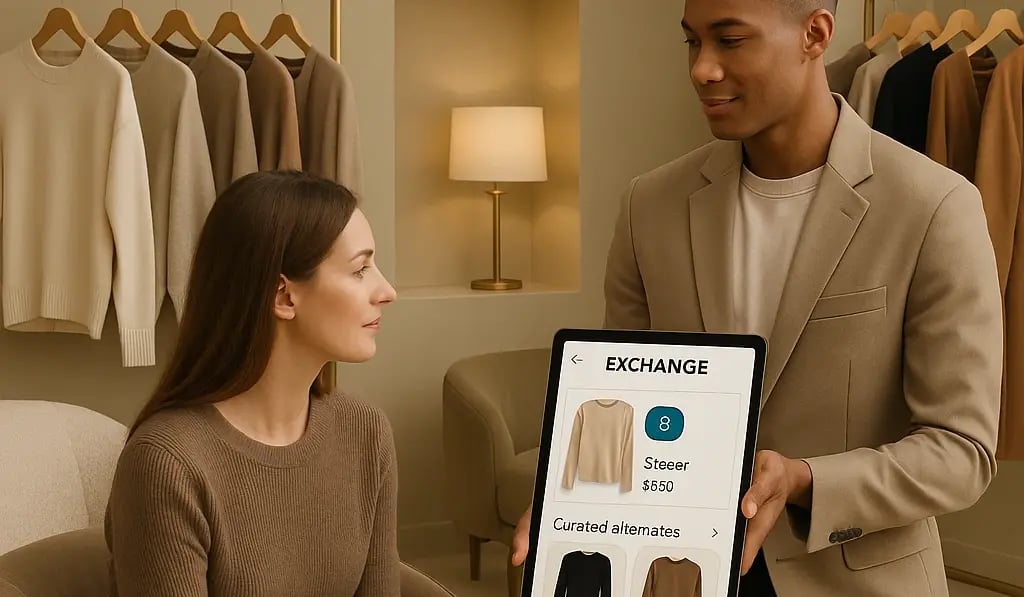
A concierge program reframes the moment: one confident recommended size with a brief reason code, plus one or two alternates aligned to the client’s style profile and availability.
For industry context on returns pressure and margin volatility, see Coresight and the broader fashion outlook at McKinsey 2025. Keep luxury tone and mechanics distinct from contemporary.
Editorial restraint beats gamified UI. Offer appointment booking, alteration credits, and private links to reserved pieces.
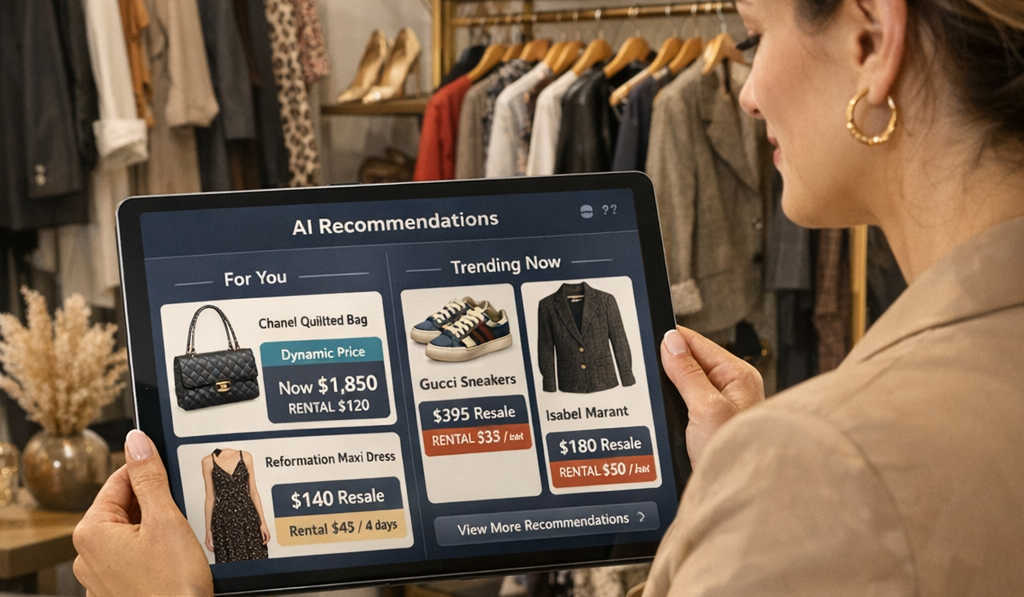
Mirror the experience across channels: a clienteling tablet should show the same size/fit badge, alternates, and inventory as the web portal.
When disappointment is met with empathy, taste, and speed, the brand earns the right to style the next occasion.
Design an exchanges-first flow for luxury CX
Translate philosophy into rails your teams can run. Start by instrumenting fit certainty, style alignment, and speed—the three reasons luxury shoppers return or keep.
Fit certainty: Bring SKU-level attributes (pattern block, rise/length, stretch %, last/width for footwear) into a size/fit service that outputs one clear recommendation with a short reason code.
Surface it everywhere a choice is made—PDP, returns portal, and cart. Style alignment: In the exchange flow, propose one or two alternates that fit the client’s saved silhouettes, palettes, and favored designers.
Keep copy editorial (“column silhouette, warmer tone”) and offer tap-to-swap chips like “longer hem” or “lower heel” to maintain control without overwhelm. Speed: Show real-time size/color availability and offer premium logistics rules for VIPs (ship replacement now, return later), with standard options for others.
Keep the exchange path faster, simpler, and more generous than a refund to nudge behavior without pressure. Keep the tone concierge. In boutique regions, offer appointment booking and tailoring as part of exchanges.
In e‑commerce, use private links and restrained visuals. Wire identity so a stylist sees the same context as the customer. For macro industry signals on value-seeking and why CX precision matters, see McKinsey 2025. For returns baselines in apparel (mid‑20% online), review Coresight Research.
Operate with KPIs, tests, and concierge guardrails
Run the program like a P&L with evidence.
• Outcome KPIs: exchange rate vs. refund rate by category and cohort; recovered revenue and margin retention; return-cycle time; repeat purchase rate for exchanged orders; NPS/CSAT around styling and ease.
• Journey KPIs: size-badge view → multi-size order share; alternate viewed → exchange selection; private link open → reserve or appointment booked.
• Technical SLOs: portal latency, error budgets, inventory sync freshness. Experiment design: start with high-return categories (dresses, denim, footwear) and top geographies.
Favor randomized control at session or user level; otherwise use matched cohorts with pre-registered stop-loss thresholds (refund spikes, CX dips). Attribute lift at nodes, not channels.
Publish weekly readouts that reconcile incremental revenue with costs (shipping deltas, restock, service time). Governance: keep an immutable decision log (inputs, reason codes, outcome); evaluate consent at activation for personalized elements; and set VIP policies explicitly to prevent inconsistency.
The goal is a calm, premium journey where disappointed moments become loyalty-building experiences. For luxury PLM and product truth that supports accurate fit and alternates, see Centric PLM.