A practical comparison of visual vs text search for fashion—and how hybrid UX converts.
How shoppers actually search: vibe-first vs keyword
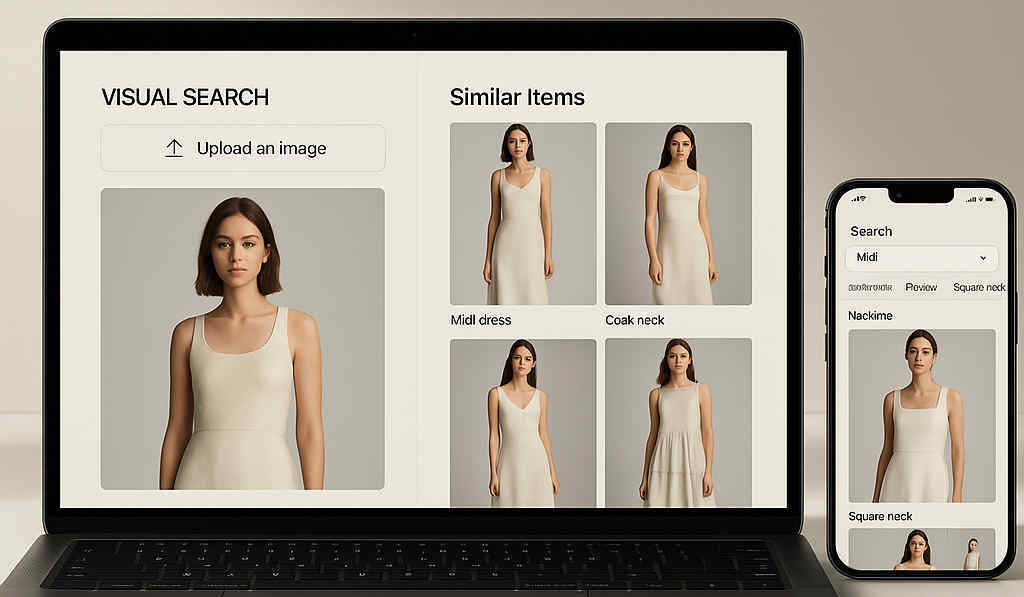
Fashion shoppers increasingly arrive from social clips and creator lookbooks with a clear mental image—silhouette, palette, occasion—rather than a SKU or formal keyword. On mobile, they want to see similar looks fast, not type precise terms. That’s why visual discovery has surged in fashion: upload a photo or tap a look to reveal similar pieces, then refine with fashion-native facets like silhouette, neckline, sleeve, rise/length, palette, and fabric hand. Text search still matters—especially for mission-based shopping and known items—but it must speak fashion fluently and hand off gracefully to visual browsing. The conversion winner is usually a hybrid: a visual-first feed that opens to “on‑taste” edits and allows keyword pivots when shoppers need specificity. Category context supports this shift. Commerce primers note the rise of visual, mobile-first journeys and style-led discovery; see Shopify. Vendors and surveys across the last few years show appetite for image-based search in retail, especially among Gen Z; a representative baseline is captured by BusinessWire’s summary of shoppers’ interest in visual search (BusinessWire). In practice, the ROI hinges on mapping what the camera sees back to a fashion-grade vocabulary, so “see it” and “say it” use the same language. Extracted features—neckline, strap width, length, toe/heel shape, palette—should map to PIM attributes the site already uses for search, filters, recommendations, and PDP explanations.
Design a hybrid search UX that speaks fashion and explains itself
Begin with the data layer. If your catalog only knows “dress, black, polyester,” no engine can retrieve taste. Define a fashion attribute spine in PIM: silhouettes (A‑line, bias, bodycon; straight vs. wide‑leg), lengths and rises, necklines and sleeves, toe/heel shapes, fabric composition and stretch %, palette families, and occasion. Map PLM’s technical truth (pattern blocks, materials, approvals) into that vocabulary so studio, search, and personalization speak one language; for clear roles and handoffs, see Centric and Centric PLM. Then design the UX around real behavior. Lead with a style feed that is visual, swipeable, and filtered to the shopper’s style profile; surface a camera icon for visual search and allow pasting of a URL or screenshot. When a shopper performs a text query, make facets fashion-first: silhouette, length, neckline/sleeve, palette, rise, toe/heel shape—then price and availability. Each result card should carry a single size recommendation and a short reason code (e.g., “runs slightly roomy”) to curb bracketing and reduce returns; Baymard’s research summarizes which PDP elements consistently build confidence: Baymard. Maintain explainability across the flow. Whether results are driven by embeddings (aesthetic similarity) or attributes, attach simple reason codes that match your tone—editorial restraint for luxury, energetic clarity for contemporary, performance cues for athletic. This lowers bounce and improves trust when shoppers take lateral pivots (“longer hem,” “warmer tone,” “lower heel”).
Prove the lift: KPIs, tests, and ops that keep it fast
Measure hybrid search like a product. KPIs: search/feed→PDP rate; time‑to‑first‑add on mobile; filter/facet engagement for fashion attributes; AOV and units per transaction from outfit completion off search; multi‑size order share; and return‑rate delta where inline size badges appear. Attribute lift at the node: camera upload → product reveal → add‑to‑cart → purchase. Experiment in high‑intent cohorts. Start with social‑led mobile traffic and two categories with strong visual signatures (dresses and sneakers). Prefer randomized control at session/user level; otherwise matched cohorts with pre‑registered stop‑loss thresholds (watch‑time or bounce spikes). Publish weekly readouts that reconcile incremental revenue and reduced reverse‑logistics costs with creative and integration spend. Keep performance as product: target P95 <300 ms for results and <200 ms for visual search hotspots; preserve fabric detail with responsive image budgets. Finally, connect search to lifecycle. When a visual search reveals taste, store it as structured preferences (silhouettes, palettes, lengths) and reflect it in email/app edits and back‑in‑stock alerts. Macro volatility and value-seeking behavior make precision CX a profit lever; the BoF x McKinsey State of Fashion materials provide context at Business of Fashion. Hybrid search that explains itself turns inspiration into confident baskets—especially on mobile.