How AI helps fashion brands personalize resale and rental assortments without diluting brand equity.
Resale and rental have moved from the fringes of fashion into the center of many brands’ growth and sustainability strategies. What began as small pilots or marketing experiments has evolved into core business lines with dedicated P&Ls, leadership attention, and cross-functional teams spanning merchandising, e-commerce, and sustainability. Luxury houses are launching authenticated resale to protect brand equity and capture value from secondary markets that once operated entirely outside their control. Contemporary labels are experimenting with rental capsules to reach younger, value-conscious shoppers who seek access over ownership. Multi-brand platforms are scaling peer-to-peer marketplaces and curated resale experiences that rival traditional e-commerce in assortment breadth and convenience.
However, as the circular fashion market matures, one pattern is emerging clearly: simply having inventory is not enough. A warehouse full of pre-owned product or rental pieces does not automatically translate into customer relevance or revenue. Without strong personalization, resale and rental experiences can feel like chaotic treasure hunts that overwhelm shoppers, strain merchandising teams, and underperform commercially. Customers may be forced to scroll through hundreds of mismatched items, inconsistent sizes, and off-brand aesthetics before they find anything that feels right for them—or they may abandon the experience entirely.
Analysts expect the global secondhand apparel market to continue growing faster than traditional retail over the next few years, driven by macroeconomic pressures, shifting consumer values, and digital platform innovation. ThredUp’s 2024 Resale Report, for example, highlights double-digit growth projections in the US resale segment and notes that retailers who integrate resale into their core businesses are seeing incremental new customers and higher engagement: ThredUp. At the same time, McKinsey and the Business of Fashion have noted that consumers are becoming more value- and sustainability-conscious, especially in younger demographics that scrutinize brand behavior and environmental impact before purchasing: BoF x McKinsey. These shoppers expect brands to provide credible circular options—and to make those options easy, attractive, and aligned with the brand’s identity.
For brands in the Apparel, Footwear & Luxury sector, this creates both expectation and risk. On the one hand, circular initiatives offer a way to tap into new profit pools, extend product lifecycles, and reduce climate impact per wear. On the other hand, circular initiatives that feel generic, off-brand, or poorly curated can disappoint loyal customers, confuse positioning, and erode perceived exclusivity or craftsmanship. An unstructured resale marketplace bolted onto a luxury site, for example, can feel more like a discount outlet than a natural extension of the maison. Similarly, a rental program that promotes items inconsistent with a brand’s core aesthetic or fit standards can undermine trust and increase returns.
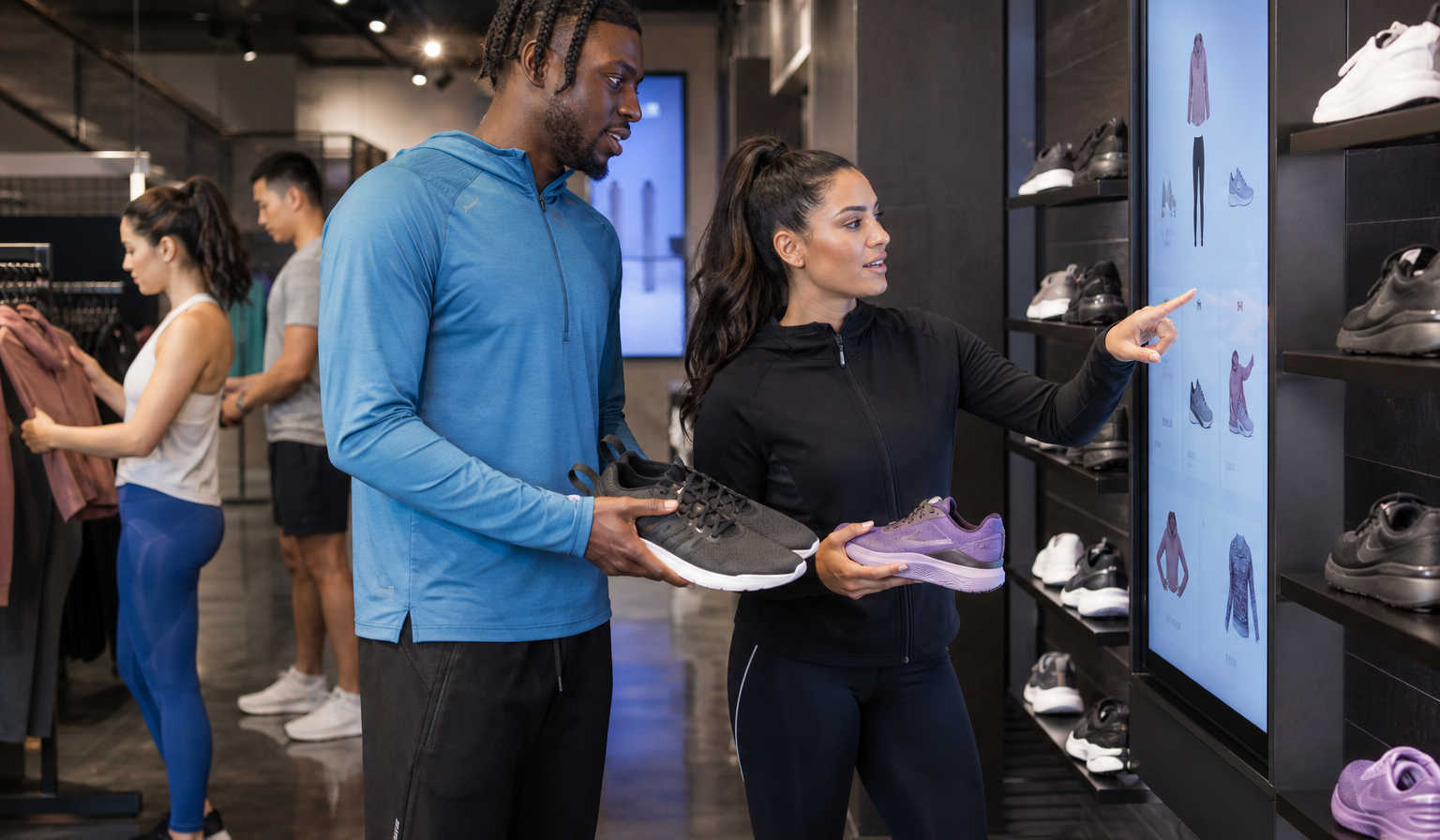
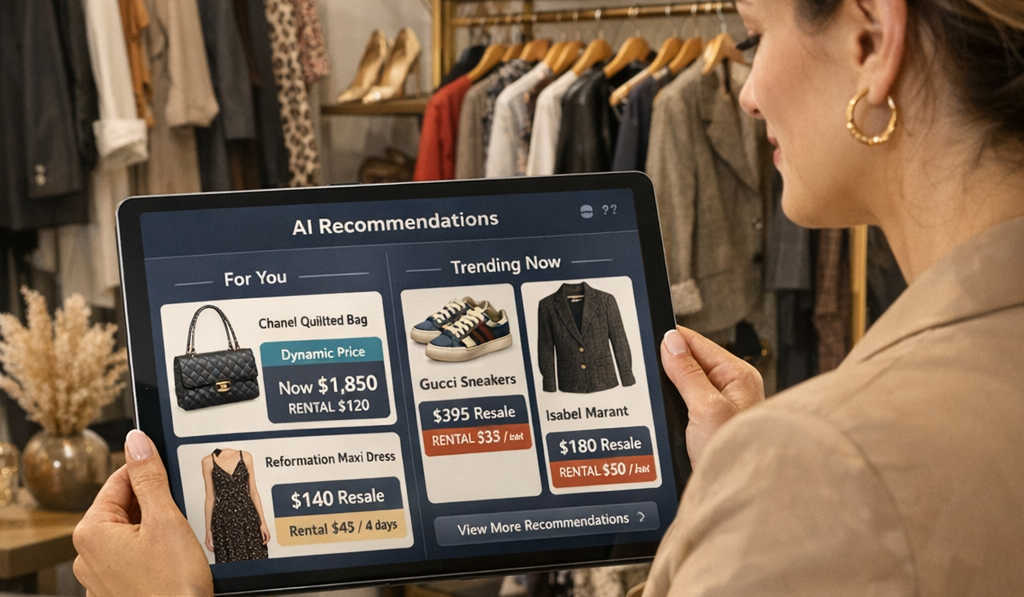
AI-powered personalization offers a way to scale circular programs while keeping them on-style and on-brand. Instead of relying solely on manual curation—which becomes impractical as inventories grow and change daily—brands can deploy AI systems that continuously learn from customer behavior, product data, and operational constraints. By combining product attributes (silhouette, fabric, palette, construction details, condition rating), customer style profiles (fit preferences, color affinity, occasion needs, price sensitivity), and real-time inventory and pricing signals, AI can surface pieces that feel like extensions of the mainline assortment rather than a random outlet. The customer experience becomes one of “curated discovery” rather than a bargain hunt.
In practice, this means that two shoppers entering the same resale or rental environment will see very different selections. A brand-loyal customer who typically buys tailored workwear might see pre-owned blazers, structured dresses, and low-mileage handbags that complement her existing wardrobe. A younger shopper browsing on mobile might see styled looks for upcoming events, with a mix of rental and resale options organized by occasion, not just by product category. For both, AI can ensure that price points, condition levels, and sizes reflect their historical patterns and stated preferences, reducing friction and decision fatigue.
These systems can also guide customers toward lower-impact choices—resale, rental, repairs, and refurbishment—at key decision points where they might otherwise default to new purchases. For example, when a customer views a full-price dress that is trending, AI can surface a similar pre-owned version in their size, along with transparent details on condition, savings, and estimated carbon or water impact avoided. When a loyal customer considers replacing a favorite pair of shoes, the experience can highlight in-house repair or refurbishment options and explain how these services extend product life while preserving comfort and fit. Done well, this supports both sustainability goals and margin protection, as brands capture value from previously sold inventory and reduce the need for aggressive markdowns on new collections.
The key is designing these systems to respect the nuances of circular inventories and operational realities. Resale assortments are inherently dynamic and often comprise one-offs or very limited runs, with varying condition, incomplete size runs, and diverse provenance. Rental programs must account for availability windows, cleaning and repair cycles, shipping times, and operational capacity. AI models must be able to factor these constraints into recommendations so that customers only see items that are genuinely available, in the right size, for the right time frame, and with accurate expectations around condition and delivery.
Equally important is managing complexity without overwhelming the shopper. While the underlying models may consider hundreds of variables—from garment measurements to return likelihood, warehouse placement, and climate impact—the front-end experience must remain simple, intuitive, and aligned with the brand’s visual and editorial language. Filters, sorting options, and explanatory messaging should reinforce the brand promise: high-quality pieces, styled with intention, offered through channels that respect both the customer’s time and the planet’s resources.
For enterprise teams overseeing these programs—CMOs, Heads of eCommerce, sustainability leaders, and merchandising directors—AI-powered personalization in resale and rental is no longer a niche experiment. It is becoming a strategic capability that influences customer lifetime value, margin structure, and brand equity. Organizations that treat circular personalization as a core discipline, supported by robust data infrastructure and clear governance, will be better positioned to capture growth in the secondhand and rental markets while reinforcing what makes their brand distinctive. Those that approach it as an unstructured add-on risk fragmenting the customer journey and ceding control of their brand narrative in one of the fastest-growing parts of the fashion ecosystem.