How AI-powered style tribe segmentation helps fashion brands move beyond demographics to drive loyalty and merchandising decisions.
Why demographics aren’t enough: from segments to style tribes
Most segmentation decks in fashion still start with age, gender, income, and maybe RFM buckets. Useful for media planning, but blunt in a world where a Gen Z shopper in Seoul, a millennial in Dubai, and a Gen X executive in London can all be part of the same “quiet luxury” tribe—and where the same customer might oscillate between performance leggings, tailored suiting, and Y2K streetwear depending on mood and channel. For MapleSage’s AFL clients, this is the heart of the problem: segmentation that doesn’t speak style will always struggle to power truly relevant personalization, merchandising, or loyalty.
Recent work from Ionio on customer hyper-segmentation in fast fashion argues that traditional techniques—demographic clustering, RFM, market-basket analysis—hit a ceiling because they are static and backward-looking. AI-based methods using embeddings, graph neural networks, multimodal models, and reinforcement learning make it possible to group shoppers by complex, evolving behavioral and stylistic patterns instead Ionio. Heuritech’s research on AI-enriched customer profiles reinforces the same point from the visual side: Instagram and other image-led platforms reveal “fashion tribes” far more granular than legacy personas can capture Heuritech.
For MapleSage’s AFL ICPs—Fashion CMOs, E-commerce Directors, Fashion CTOs, Merchandising VPs, and CX leaders—AI-powered style tribe segmentation addresses multiple pain points at once:
• Personalization that currently feels like “people who bought X also bought Y” can become “this looks like your world.”
• Merchandisers get a more realistic view of who actually buys and keeps their products, beyond assumed personas.
• CTOs and data teams can justify investments in CDP, PIM, and AI by tying them to visible shifts in CX and merchandising outcomes.
This post lays out how to design and operationalize style tribes using AI and MapleSage’s SageRetail platform: what data to use, how to make tribes interpretable and brand-aligned, and how to tie them directly to campaign strategy, assortment planning, and ICP-level lead generation.
Designing AI-first style tribe clusters for AFL brands
Designing style tribes starts with data, not vibes. Traditional segmentation in fashion has been anchored on demographics, RFM, and channel behavior. Useful, but insufficient when a 23-year-old skater, a 40-year-old architect, and a 29-year-old buyer all dress in “quiet luxury” tailoring and sneakers. AI lets brands re-cluster customers around style, fit, and intent instead of age and postcode.
Ionio’s deep dive into AI-driven customer hyper-segmentation in fast fashion outlines a toolkit that maps well to AFL needs: embedding-based clustering, graph-based segmentation, multimodal models that fuse text (reviews, product attributes) and images (UGC, lookbooks), and reinforcement learning to keep clusters fresh Ionio. Heuritech’s work on AI-powered customer profiles stresses that image recognition across Instagram and other visual platforms can surface real style tribes that cut across demographics Heuritech.
For MapleSage’s AFL clients, an AI-first style tribe program might:
• Use SageRetail to build style embeddings per shopper, based on kept items, browsed SKUs, and engagement with content (e.g., silhouettes, palettes, fabrics, occasions).
• Overlay engagement and intent: who responds to performance narratives vs. sustainability vs. status? Who buys early at full price vs. waits for markdowns?
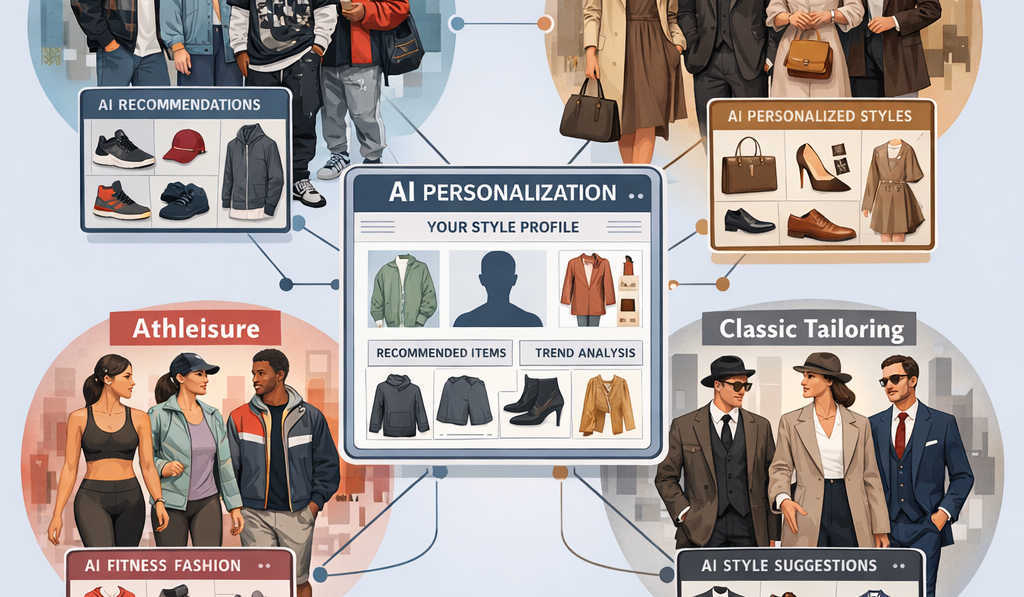
• Cluster customers into 8–15 actionable style tribes that align with brand strategy—e.g., “Gen Z streetwear experimenters,” “Quiet luxury city professionals,” “Sustainable capsule wardrobes,” “Performance-first runners,” “Resort minimalists.”
Academic work and practitioner guides on segmentation in ecommerce highlight the importance of interpretability: marketers and merchandisers must be able to understand why a tribe exists and what defines it, not just accept black-box clusters Ionio. That’s where MapleSage’s approach should emphasize explainable AI: each style tribe comes with a narrative (“loves column silhouettes, neutral palettes, low heels”), supporting metrics, and key products.
Once tribes exist, experiences can be rewired:
• Homepages and style feeds reflect a shopper’s tribe(s) rather than generic seasonal grids.
• Emails, SMS, and app pushes carry tribe-specific stories, capsules, and fits.
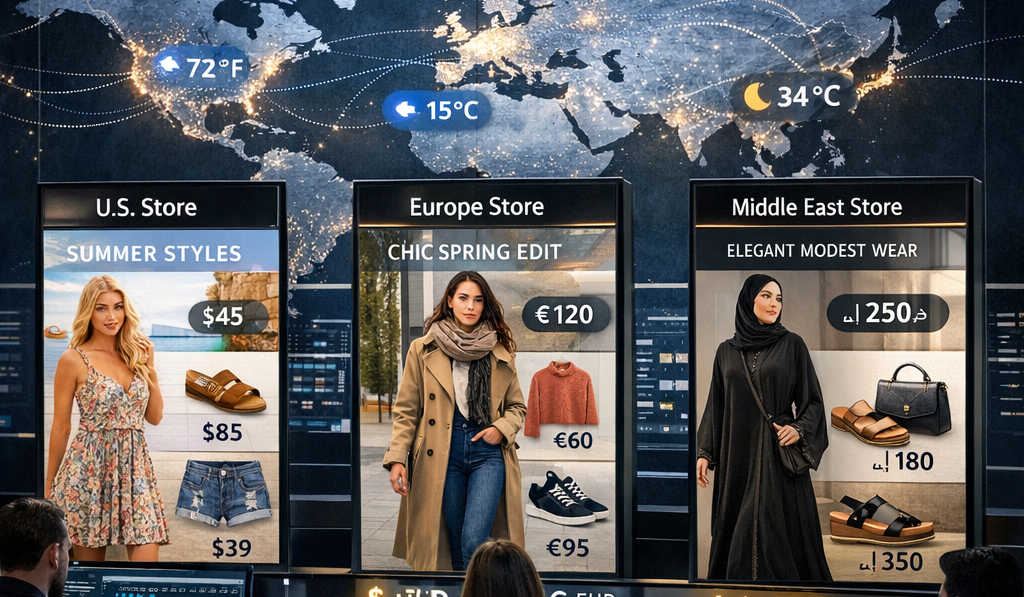
• Merchandising teams see tribe penetration per category and region, informing buys and capsule planning.
This is where segmentation stops being a CRM-only exercise and becomes a shared language across marketing, product, and merchandising.
KPIs, ICP scoring, and rollout roadmap for style tribes
To make AI style tribes a strategic asset rather than a one-off experiment, AFL leaders need to connect them to KPIs, ICP scoring, and roadmap decisions.
On the KPI side, track:
• Conversion and AOV uplift for tribe-aware journeys vs. generic journeys.
• Return-rate differences by tribe; some tribes (e.g., “fit-anxious shoppers”) may need richer fit content and more conservative recommendations.
• Email and push performance when content is tailored by tribe vs. segment by channel or region alone.
• Long-term metrics: LTV, retention, and cross-category penetration by tribe.
Research syntheses on customer segmentation in ecommerce underline that the most effective programs tie clusters directly to revenue, margin, and marketing efficiency, not just to audience understanding Ionio. Heuritech’s perspective on real-time customer profiling adds that profiles must be continuously refreshed as social trends and wardrobes shift, especially for Gen Z and millennial shoppers who fluidly move between aesthetics Heuritech.
ICP alignment is where MapleSage can create particular leverage. Style tribes should be scored against AFL ICPs:
• Fashion CMO: tribes that respond strongly to editorial storytelling, social commerce, and loyalty.
• E-commerce Director: tribes with high digital conversion, mobile engagement, and sensitivity to UX.
• Fashion CTO: tribes that benefit most from advanced fit, visual search, or AI assistant features.
• VP Merchandising: tribes that anchor key categories (denim, sneakers, dresses) and influence trend bets.
• CX Director: tribes where VIP or high-touch experiences can materially lift LTV.
A topic passes MapleSage’s validation bar when tribes score 4+ relevance for at least two ICPs—and style tribes naturally do, because they bridge marketing, product, and CX.
Rollout should mirror other AI programs:
• Phase 1 – Discovery: build and interpret initial tribes; socialize with marketing and merchandising.
• Phase 2 – Activation: wire tribes into onsite personalization, email, and basic merchandising reporting.
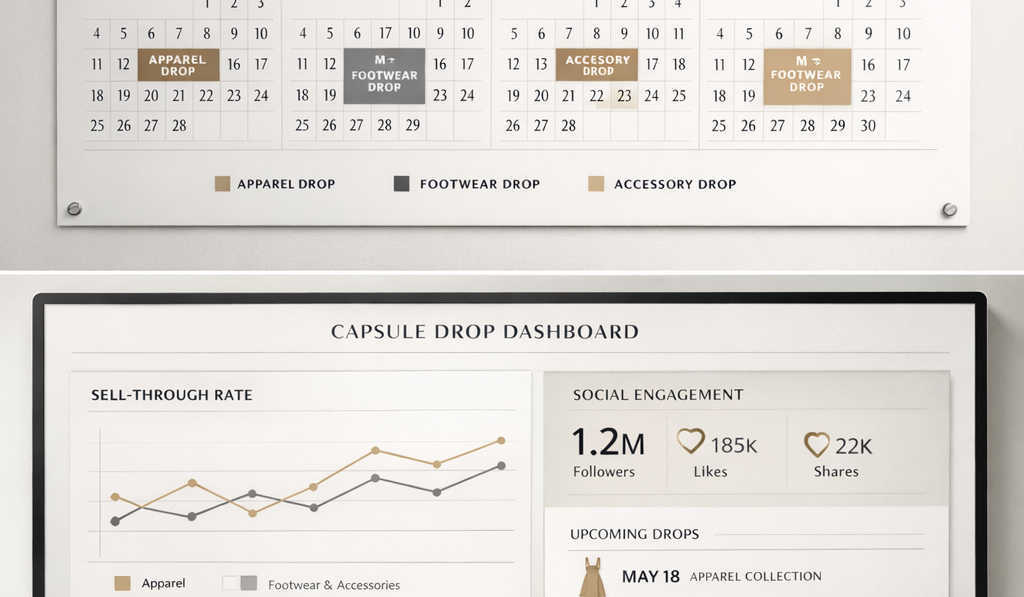
• Phase 3 – Strategy: use tribe data to inform capsule design, drop calendars, and even store assortments.
Guardrails: keep tribes descriptive, not judgmental; avoid mapping sensitive attributes; and ensure fairness (e.g., tribes that skew to smaller markets or under-represented audiences still get meaningful product and storytelling attention if they align with strategic goals).
For MapleSage, AI style tribes underpin all four AFL campaigns: they make personalization more emotionally resonant (Campaign 1), show off stack integration by tying PLM/PIM and CDP data together (Campaign 2), inform merchandising bets (Campaign 3), and sharpen e-commerce UX (Campaign 4). They are also a natural way to talk about MapleSage’s graph-based, agentic AI approach in language fashion leaders actually use: style, not segments.