The data model behind fashion personalization—and how to operate it.
Why fashion needs a style graph now
Fashion personalization fails more from weak product data than from weak algorithms. When a catalog knows only “dress, black, polyester,” no engine can recommend coherent looks, explain why items pair, or suggest confident size alternatives.
The fix is a fashion-grade data model that merchandisers trust and machines can use: a product attribute spine plus a shopper style graph. Together, they turn “people who viewed X” into “show the satin, bias-cut slip with a cowl neckline and strappy metallic sandals—because this customer saves column silhouettes and off-white palettes.” Start with the business stakes.
Visual-first discovery and mobile shopping dominate fashion journeys in 2025, and shoppers expect a feed that feels like a stylist, not a search box. That requires attributes aligned to how people think about clothes—silhouette, palette, fabric hand, rise and length, neckline and sleeve, toe/heel shape—not just category and color.
It also requires size/fit intelligence that translates pattern blocks, stretch %, and grading rules into a single recommended size and a short reason code, which curbs bracketing. Industry briefs underline these shifts: Shopify’s enterprise snapshot of fashion e‑commerce in 2025 frames the rise of social-to-shop, attribute-led discovery, and personalization at scale (Shopify).
Macro outlooks from McKinsey and BoF highlight uneven demand and margin pressure, making data-backed discovery and returns reduction a profit lever (McKinsey 2025).
Avoid common traps.
Don’t bury attributes in prose or allow free-text chaos that fragments filters and undermines SEO.
Don’t build a headless front end without an attribute spine; beautiful screens won’t compensate for thin data.
And don’t silo visual search from text: extract interpretable features from images (neckline, strap width, length) and map them back to the same vocabulary so “see it” and “say it” agree.
With these foundations, you can make discovery, PDPs, email, and clienteling explainable—and measurably more profitable.
Design a fashion attribute spine and style graph
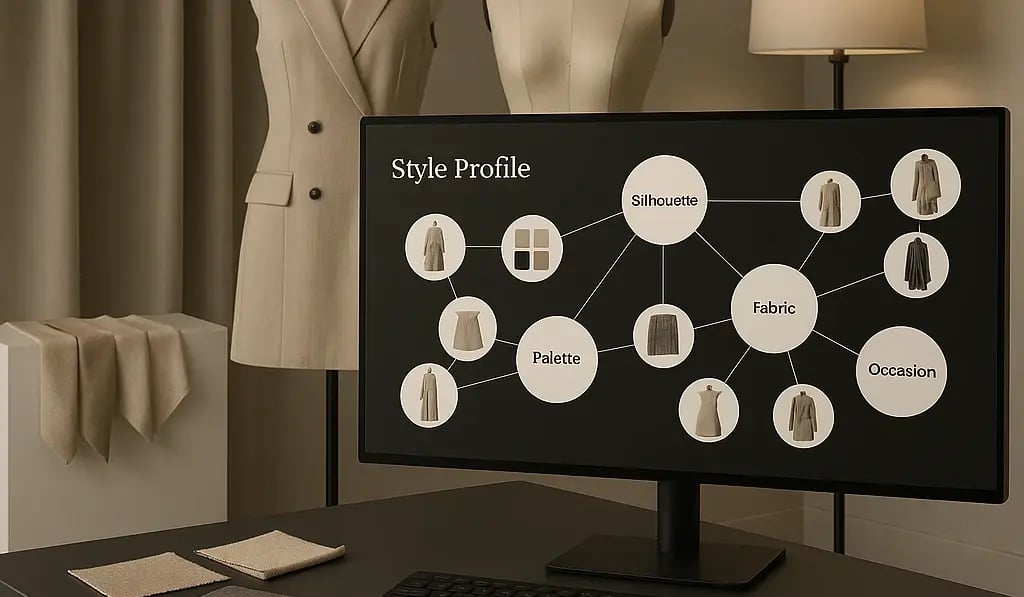
Treat your product data like a runway spec sheet. A credible fashion attribute spine starts with silhouettes (A-line, bias, bodycon; straight vs. wide-leg), lengths and rises, necklines and sleeves, toe/heel shapes in footwear, fabric composition and stretch %, pattern families, palette, occasion, and care. Make these first-class fields in PIM—not free text buried in descriptions—using controlled vocabularies that merchandisers actually use.
Map PLM’s technical truth (pattern blocks, materials, BOM approvals) into this spine so that everything from studio to PDP shares the same language. Photography is data too: tag finish (satin/matte), drape, strap width, and hardware tone so visual search and outfitting can match looks with taste.
On top of the spine, build a style graph for each shopper that blends declared, behavioral, and contextual signals. Declared signals come from lightweight quizzes and preference centers (“column silhouettes,” “off-white palette,” “wide-leg trousers under $300”). Behavioral signals come from what a shopper taps, dwells on, saves, or hides across web, app, email, and boutique clienteling.
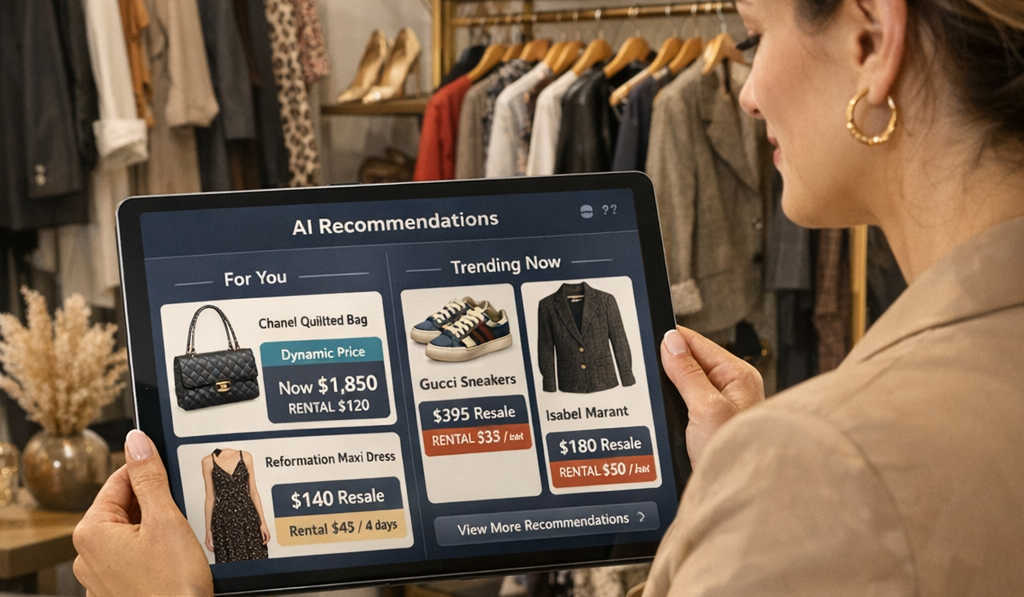
Contextual signals include season, location, and occasion prompts. Connect all of these to the same vocabulary so you can explain every recommendation with a short, brand-aligned reason code: “paired for column silhouette and satin finish,” “similar wide-leg shape with 2% stretch.” Wire the foundation into your stack.
PLM should publish events when styles hit milestones; PIM enriches customer-facing attributes and media; personalization/search consumes the spine plus style graphs to rank cards in a personalized feed, facet search, shop-the-look, and post-purchase styling.
For platform primers and industry context, see Shopify and PLM overviews from Centric. Trend-signal providers like Heuritech show how silhouettes and palettes move in the wild—signals you can map directly to attributes.
Run it with KPIs, tests, and governance
Operate the model like a product—measured, explainable, and reliable. Scoreboard the journey nodes the model influences:
• Discovery: search/feed-to-PDP rate, filter engagement, time-to-first-add on mobile.
• Basket building: attach rate from outfit completion, AOV and units-per-transaction.
• Returns: multi-size order share and return-rate delta when size badges and style-coherent alternates are visible.
• Lifecycle: revenue per send for style-led email, save rate on curated edits, and back-in-stock conversion when alternates are style-aware.
Run staircase rollouts behind feature flags. Start with high-impact categories (dresses, denim, sneakers). Prefer randomized control at the session or user level; otherwise, use matched cohorts with pre-registered stop-loss thresholds (bounce spikes, save-rate dips).
Attribute lift at journey nodes—“style feed → PDP → add-to-cart,” not just channel totals. Pair outcome KPIs with technical SLOs: P95 latency <300 ms for results, image decode budgets that preserve fabric detail, and low error rates.
Instrument observability from signal to action; a concise primer on why this matters for scale is here: Splunk. Keep privacy a performance feature. Evaluate consent and preferences at activation for any personalized block; minimize PII in decision payloads; keep retrieval boundaries tight so services fetch only minimal context (style cluster, size band, budget).
This reduces latency and risk while improving customer trust. With a fashion-grade spine and style graph, your storefront, search, email, and clienteling finally speak the same language—making personalization feel like a stylist, not a script.