How to personalize athletic shopping with performance, fit, and climate signals.
Build profiles for performance, fit, and climate
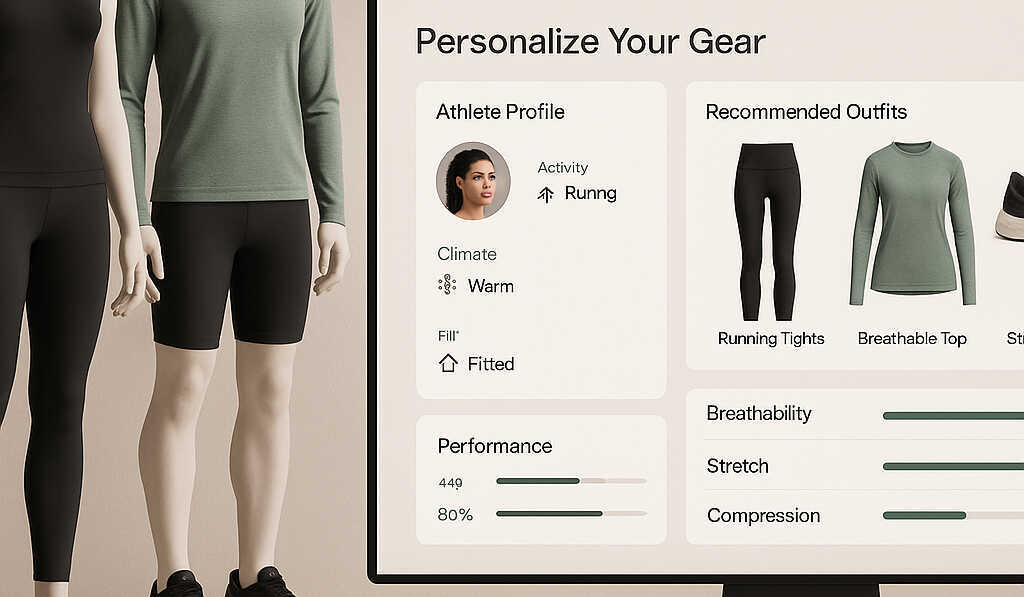
Athletic and performance wear shoppers don’t browse like casual apparel buyers—they arrive with a mission shaped by activity, micro‑climate, and fit tolerance. A runner in humid Miami needs breathability and anti‑chafe seams; a powerlifter prioritizes compression and mobility; a hiker wants temperature regulation and layering logic. Begin by modeling these realities as first‑class data. Create a lightweight athlete profile that blends declared signals (primary activities, climate, preferred compression, inseam and rise, last/width for trainers) with behavioral and contextual signals (tap/dwell patterns, season, location).
Map all of it to a fashion‑grade attribute spine so recommendations are explainable: silhouettes, fabric hand, stretch %, venting, inseam/short length, rise, and footwear last/width. With this foundation, size/fit intelligence becomes specific to performance categories. For apparel, use SKU‑level attributes like fabric composition and stretch %, garment construction (gussets, flatlock seams), rise/length, and pattern block to emit a single recommended size and a short reason code: “We recommend M—2% elastane, roomy cut for shoulder mobility.”
For footwear, last shape and width, stack height, rocker profile, and upper materials matter; output: “Try 42.5—stability last, medium width; you prefer firmer midsoles.” Inline badges should appear above the fold on PDPs and travel into cart, where redundant sizes are flagged to curb bracketing. Ground the approach with credible sources and category context.
Macro volatility and value‑seeking behavior raise the bar for precision in CX—see the BoF x McKinsey State of Fashion overview at Business of Fashion and the full report at McKinsey. For commerce baselines and mobile discovery patterns in fashion, review Shopify. Tie returns reduction directly to fit clarity in performance categories; fewer multi‑size orders protect contribution margin without racing to discounts.
Design mobile style feeds for athletes’ intent
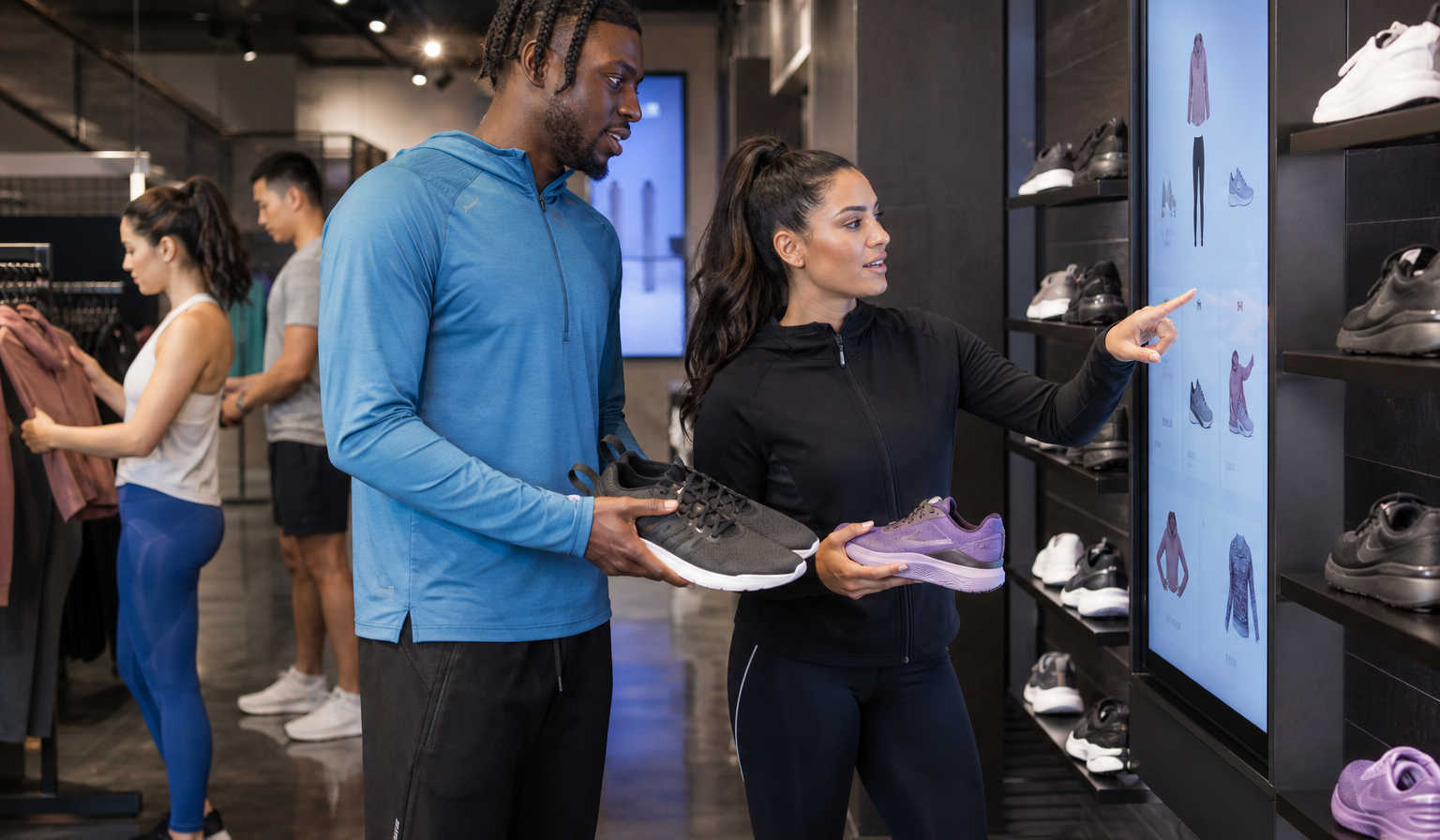
On mobile, inspiration often begins with a vibe or creator clip, not a keyword. Replace blank boxes with a style‑and‑performance feed that understands athletic intent. Cards should feature on‑body visuals, performance cues (breathability, stretch %, compression), and a size recommendation badge.
Add quick pivots that reflect athlete trade‑offs—“more compression,” “cooler fabric,” “longer inseam,” “stability last.” For social‑to‑shop journeys, support a camera icon and UGC ingestion so shoppers can “shop the workout look” they saw; when extracting attributes from images (neckline, strap width, length, palette), map them back to the same vocabulary to keep experiences explainable.
Outfit completion should be performance‑aware: pair a tempo short with a moisture‑wicking top, no‑chafe socks, and a stability trainer, with concise reasons (“paired for heat and impact days”).
Prioritize in‑stock variants and avoid suggesting scarce sizes in core items. Provide climate‑aware edits (“humid heat run kit,” “cold‑start warm‑up layers”). For Gen Z and creator‑led commerce, the platform playbooks matter; learn the mechanics of in‑video shopping and live commerce at TikTok Shop. Keep luxury and athletic tone distinct: premium restraint for boutique performance brands; energetic clarity for mass‑market athleisure.
Discovery that feels like a stylist/coach raises conversion and reduces returns. Back it with a data model merchandisers trust—silhouettes, rises/lengths, fabric hand and stretch, toe/heel shapes—and a consent‑aware profile that travels across web, app, and boutique. For trend sensing that informs performance silhouettes and palettes by region, see Heuritech.
Operate with KPIs, tests, and reliability
Operate the program like a product with a scoreboard and SLOs. Outcome KPIs: PDP view‑to‑add rate, AOV and units per transaction from outfit completion, multi‑size order share, return‑rate delta on orders influenced by size badges, and repeat purchase rate by activity cohort.
Journey KPIs: time‑to‑first‑add on mobile, filter/facet engagement for performance attributes, and attach rate for socks/bras/accessories. Attribute lift at journey nodes (“style feed → PDP → add‑to‑cart”), not just at channel level. Experiment with discipline. Start with two high‑return categories (e.g., performance tights and trainers) and social‑led mobile traffic.
Prefer randomized control at the session/user level; otherwise use matched cohorts with pre‑registered stop‑loss thresholds (bounce spikes, save‑rate dips). Publish weekly readouts reconciling incremental revenue and reduced reverse‑logistics costs with creative and integration spend. Pair business KPIs with technical SLOs: P95 <300 ms for feed/recommendations, image decode budgets that preserve fabric texture, and low error rates.
Governance and privacy are performance features. Evaluate consent at activation for any personalized block; minimize PII in decision payloads; and keep retrieval boundaries tight so services fetch only minimal context (style cluster, size band, budget). Maintain an immutable decision log (inputs, reason codes, outcomes) so tuning and audits are straightforward. For industry baselines and why these levers pay in fashion, keep Shopify and McKinsey handy in leadership decks. The result is an athletic storefront that converts like a coach—fast, confident, and on‑taste.