Style-led VIP gifting boosts holiday revenue without heavy discounts.
Why VIP gifting beats discount-driven holiday tactics
Holiday revenue in fashion doesn’t have to come at the cost of margin—or brand equity. The brands that outperform don’t simply blast discounts; they deliver gifting that feels personally curated, size‑confident, and effortless across channels.
In luxury and contemporary segments, that means making VIP profiles actionable, composing tasteful gift edits that match silhouettes and palettes a client actually wears, and offering concierge options like reserve‑in‑boutique and alterations.
Done right, this approach lifts full‑price sell‑through and customer lifetime value (LTV) while reducing preventable returns.
Start with the customer reality. Holiday shoppers—especially VIPs—are time‑pressed and inspiration‑led. They respond to look‑based suggestions, clear size confidence, and low‑friction fulfillment.
A coherent data foundation turns that into product: unify identity across boutique, e‑commerce, and app; build a lightweight style graph per client (declared tastes, behaviors, and context); and ensure your product data speaks fashion fluently—silhouette, length and rise, neckline and sleeve, fabric composition and stretch %, toe/heel shapes, palette, occasion.
With this, you can explain every suggestion: “paired for column silhouette and satin finish,” “lower heel for your preferred inseam.” Next, render gifting like a stylist would. On mobile and email, present curated gift edits by recipient and occasion—“Evening Looks Under $1,500,” “Objects of Desire for the Minimalist,” “Resort Capsule for January.”
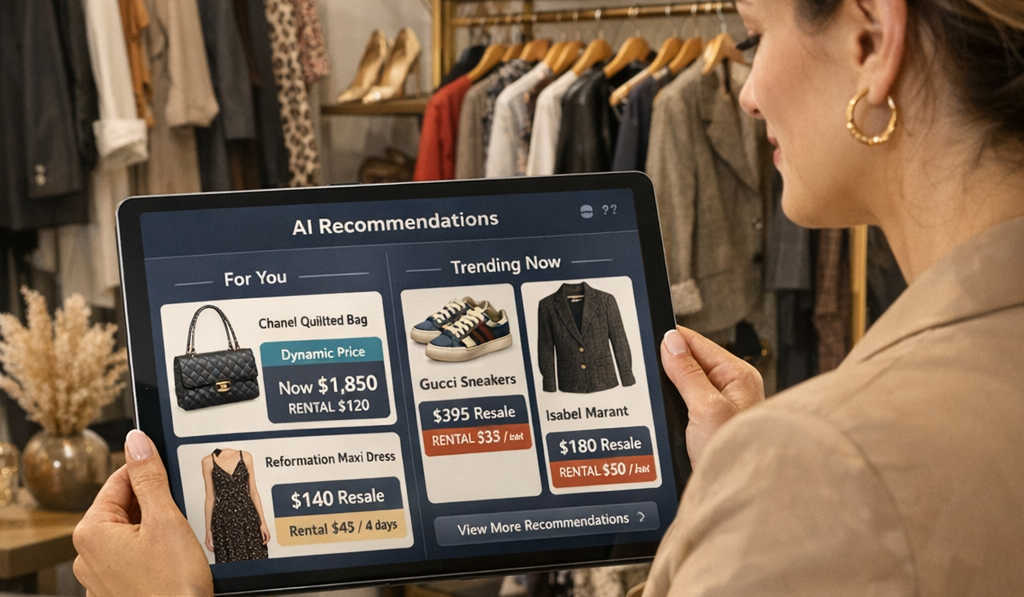
Each card should include a recommended size with a short reason and a small outfit strip to raise AOV through coherent accessories. Offer tasteful pivots: “warmer tone,” “longer hem,” “lower heel.” In luxury, keep tone editorial and restrained; in contemporary, energetic and price‑aware.
Add concierge options: reserve in boutique, private links for VIPs, and pre‑scheduled tailoring. Support the experience with reliable rails. Keep P95 <300 ms for personalized blocks; make inventory awareness explicit so suggested gifts are truly available.
When a hero item is constrained, route to authenticated alternates or back‑in‑stock with style‑aware logic. For macro outlooks that frame why personalization beats blanket promotions in 2025, see the BoF x McKinsey State of Fashion 2025 overview at Business of Fashion.
For commerce baselines on mobile, social‑to‑shop journeys, review Shopify. The result is a season of full‑price gifting that feels like a service—not a sale.
Design VIP gifting: profiles, curated edits, and concierge UX
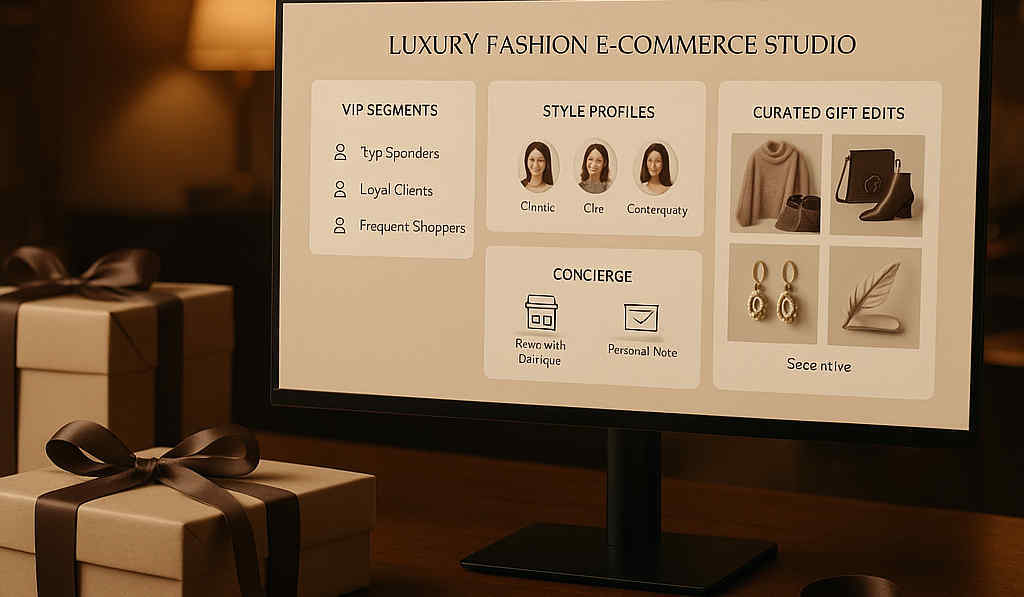
Design the program around a consent-aware profile and a fashion attribute spine, then express it with a concierge UX. Profile: unify identity across boutique, e‑commerce, and app; capture declared tastes (silhouettes, palettes, preferred designers), fit nuances (size bands, heel tolerance, last width), budget bands, and gift recipient preferences (self vs. others).
Spine: ensure your PIM carries fashion‑grade attributes—silhouettes, rises/lengths, necklines/sleeves, fabrics and stretch %, toe/heel shapes, palette—so curated edits and explanations read like a stylist, not a script. Concierge UX: present curated gift edits by persona and occasion (black‑tie, resort, office‑to‑evening) with on‑model imagery and a single size recommendation per item. Offer tasteful options to reserve in boutique, book alterations, or include personal notes and premium packaging.
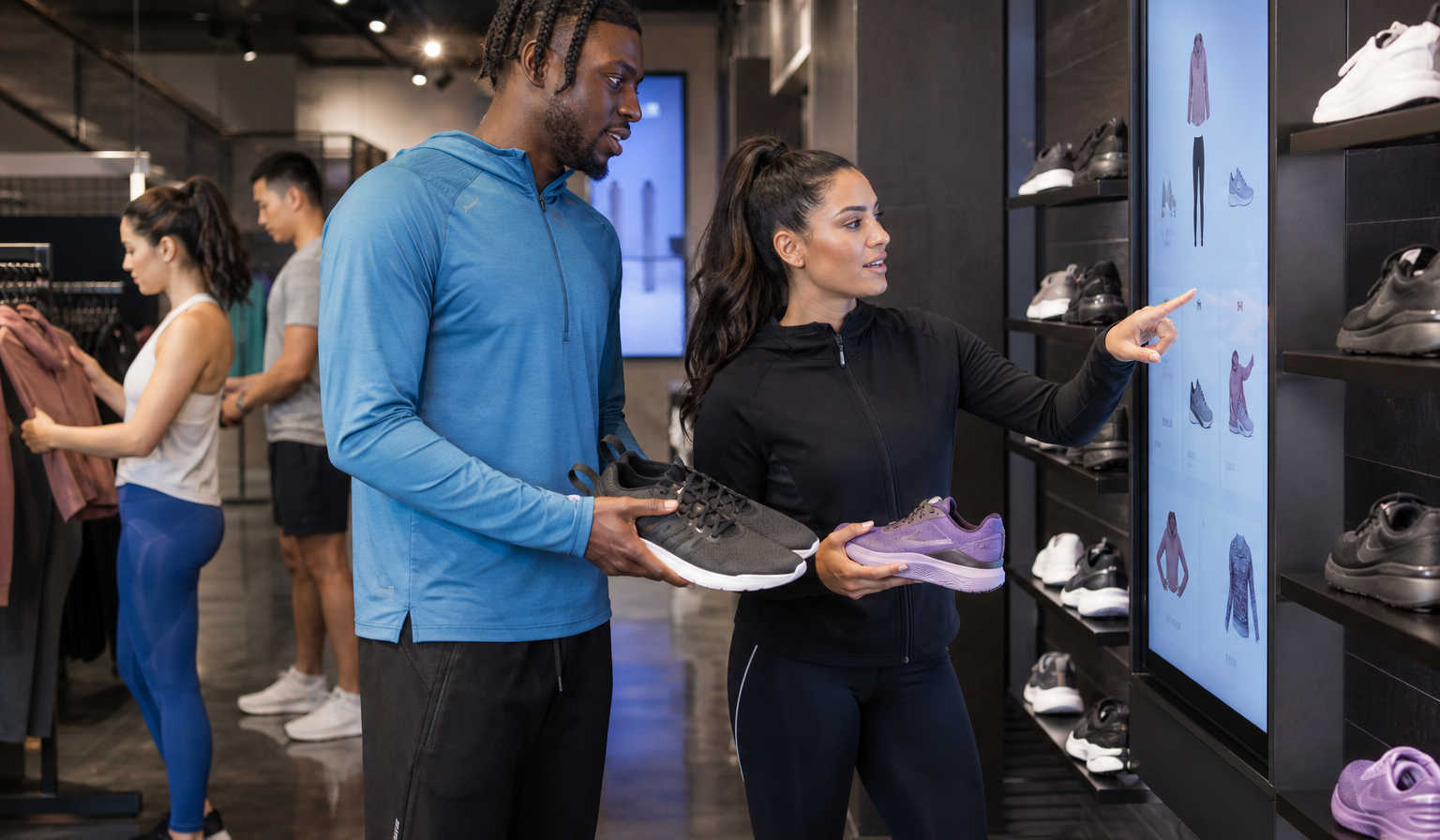
Mirror the same experience on clienteling tablets so stylists can co‑shop with VIPs. Wire timeliness and channels. Holiday intent peaks on mobile and social‑led traffic; ensure rapid rendering (P95 <300 ms) for personalized blocks and near real‑time inventory so gift edits are truly shoppable. Blend email, app, and SMS for opted‑in VIPs; use editorial restraint in luxury copy.
When popular items constrain, pivot to authenticated alternates or back‑in‑stock alerts that keep the vibe, not just the SKU. For macro context on fashion’s 2025 holiday dynamics and why personalization defends margin, see the BoF x McKinsey State of Fashion overview at Business of Fashion, and platform baselines for commerce and mobile discovery via Shopify.
Operate with KPIs, experiments, and concierge guardrails
Operate VIP gifting like a product with CFO‑ready evidence and guardrails. Outcome KPIs: revenue per VIP, full‑price sell‑through during holiday, attachment rate of accessories (outfit completion), exchange vs. refund mix (personalization should lower refunds), and repeat purchase rate in Q1 from VIPs who received curated edits. Journey KPIs: open→click on curated edits, click→add‑to‑cart, time‑to‑first‑add on mobile, reserve/book‑appointment rate, gift note utilization, and back‑in‑stock recovery for constrained items.
Attribute lift at the node—“curated edit → PDP → add” and “reserve → pickup”—not at a channel level. Experiment design: start with a canary cohort of top VIPs and high‑intent gift buyers. Prefer randomized control at user level (curated edit vs. generic promo), or matched cohorts with pre‑registered stop‑loss thresholds (unsubscribe spikes, margin dips). Test levers: concierge options (reserve now, tailor later), copy tone, and budget filters.
For luxury, prioritize exclusivity and editorial restraint; for contemporary, emphasize style capsules under price bands. Guardrails: publish MAP and maximum discount rules; cap outreach frequency; protect privacy by evaluating consent at activation and minimizing PII in decision payloads. For macro context on why tailored experiences win in uneven demand, consult the State of Fashion collection at McKinsey and mobile discovery realities via Shopify.