#FashionAI
#FashionEcommerce
CircularFashion

How AFL brands use AI-powered mobile style feeds to turn Gen Z fashion discovery into conversion, loyalty and insight.
Gen Z is no longer the future of fashion ecommerce; they are the present. Their spending power is rising rapidly and their expectations are reshaping how Apparel, Footwear & Luxury brands must design digital experiences. They discover outfits through short-form video, creator content and AI assistants; they shop on their phones; and they expect journeys that feel personalised, visual and fast. Multiple data sources make the scale of this shift impossible to ignore. Wizzy.ai’s 2026 article on mobile product discovery trends reports that Gen Z now drives around 40% of global ecommerce traffic and dropped more than $360 billion in 2025 alone, with 75% of this cohort shopping primarily on mobile. Wizzy.ai – Mobile Product Discovery: 5 Trends Gen Z Demands in 2026 The same piece notes that 50–60% of Gen Z shoppers bounce when mobile discovery lags—friction kills impulse buys—and that retailers who adapt to mobile-first discovery patterns can recover 25–30% of otherwise lost carts. App ecosystems are telling the same story. Glance, a personal AI shopping feed app, uses an intelligent agent and a single selfie to build a deeply personalised fashion feed that updates daily based on the shopper’s look, local weather, trends and upcoming occasions. Instead of browsing catalogues, users scroll a feed where they are effectively the model, and can chat with the agent to refine style choices for specific events or moods. Apple App Store – Glance: Shop with AI Shoppin’ positions itself as the “#1 fashion discovery platform,” combining AI discovery, virtual try-on and made-to-measure fulfilment so users can turn saved Pins, TikTok looks and screenshots into custom garments. Apple App Store – shoppin: AI Discovery & Try-On For MapleSage’s AFL ICPs—Fashion CMOs, E-commerce Directors, CX leaders and Fashion CTOs—this is exactly where Campaign 1 (“AI Personalization for Fashion Customer Loyalty”) and Campaign 4 (“Fashion E-commerce Conversion Through AI”) converge. The strategic question is no longer whether Gen Z will shop online—they already do—but whether their AI-mediated, mobile-first fashion journeys will play out on your surfaces or someone else’s. This post argues that the answer lies in AI-powered mobile style feeds that feel like Gen Z’s social streams but are grounded in your brand’s aesthetic, sizing realities and merchandising goals, orchestrated by MapleSage’s SageRetail decisioning layer.
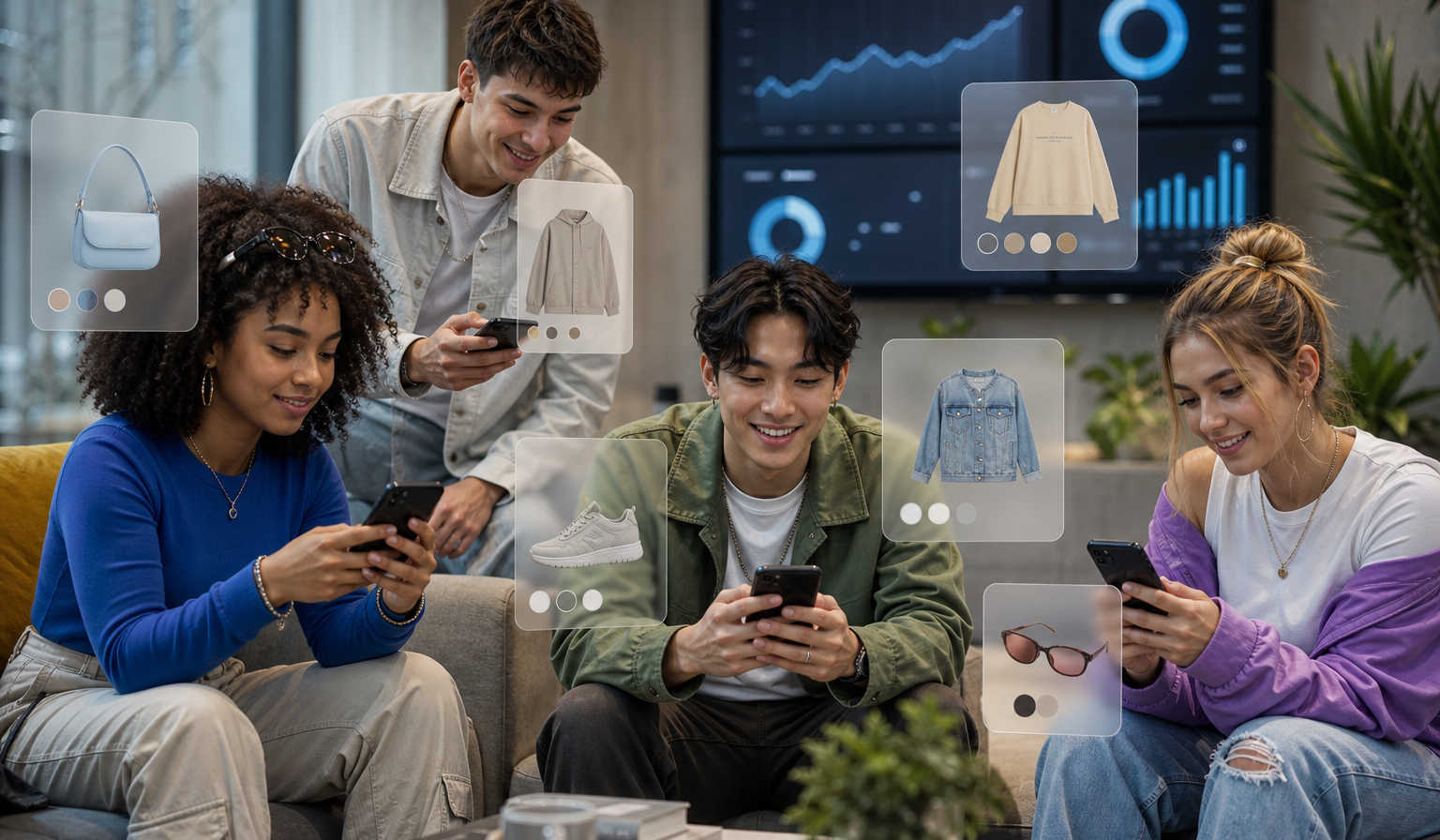
Designing mobile-first AI style discovery for Gen Z means starting from their reality, not from legacy ecommerce patterns. This cohort grew up with algorithmic feeds as their default interface: TikTok’s For You Page, Instagram Reels, YouTube Shorts and Spotify’s personalised mixes. They are accustomed to swipe-based decisions, snackable visuals and instantaneous feedback. Typing long queries into a cramped search bar and paging through uniform PLPs feels like a tax they only pay when they have no alternative. Recent data makes those expectations concrete. Wizzy.ai’s 2026 article on mobile product discovery notes that Gen Z now drives around 40% of global ecommerce traffic and that 75% of this cohort shops primarily on smartphones. The same piece reports that 62% of Gen Z prefer starting discovery with photo uploads from their camera roll instead of typing, and that visual search journeys can deliver up to a 3x conversion edge over traditional text-only search in mobile contexts. Wizzy.ai – Mobile Product Discovery: 5 Trends Gen Z Demands in 2026 On the app side, tools like Glance and shoppin’ show how AI-driven personalised feeds and conversational discovery are becoming mainstream. Glance offers a personal AI shopping feed built from a selfie and contextual signals like local weather and upcoming occasions, turning the shopper into the model and delivering a daily, personalised fashion stream. Apple App Store – Glance: Shop with AI Shoppin’ combines AI discovery, virtual try-on and made-to-measure production so users can transform Pinterest or TikTok inspiration into custom garments that actually fit. Apple App Store – shoppin: AI Discovery & Try-On For MapleSage’s AFL ICPs—Fashion CMOs, E-commerce Directors, CX leaders and Fashion CTOs—these signals paint a consistent picture: the “homepage” for Gen Z is effectively a personalised, visual feed, not a static hero banner and grid. SageRetail is built for this world. By ingesting PLM attributes (silhouettes, fabrics, rises, palettes, sustainability tags), fit and return data, and behavioural signals, SageRetail constructs style graphs for each shopper and tribe—quiet luxury, streetwear, modest occasionwear, athleisure, performance wear. On mobile, those graphs power infinite style feeds instead of static PLPs: card-based layouts showing complete looks, creator-inspired outfits and mission-led rails (“festival weekend,” “Ramadan iftar dinners,” “back-to-campus athleisure”) tuned to each profile. UX patterns should feel as natural as social: vertical feeds with large imagery, quick “more like this / less like this” gestures, inline size-confidence badges and transparent price cues. Visual search and “shop the screenshot” entry points let users upload or paste images from TikTok or Instagram and see similar looks grounded in your assortment. Conversational prompts such as “show me Eid-ready outfits under $300 I can wear to evening gatherings” or “I need a quiet-luxury interview look that works in Dubai heat” can sit alongside or even replace traditional search, with SageRetail translating natural language into missions, constraints and tribes behind the scenes. Crucially, fit intelligence must be built in from the start: size and keep-rate signals should shape which outfits and silhouettes appear at the top of the feed so that personalisation drives confident, low-return purchases, not just inspiration.
To run AI style feeds for Gen Z as a growth engine rather than a UX experiment, AFL brands need a programme that combines measurement, governance and continuous learning. Without that, even beautifully designed feeds will struggle to earn budget and board-level attention. The KPI stack should start with mobile-specific performance. Fashion CMOs, E-commerce Directors and CFOs should track conversion rate, revenue per session and net revenue after returns for cohorts exposed to SageRetail-powered style feeds versus control experiences that rely on traditional search and PLPs. These metrics should be segmented by age band, traffic source and tribe; a Gen Z shopper landing from TikTok with a screenshot should be compared to similar cohorts, not to a Boomer browsing via desktop. Wizzy.ai’s 2026 analysis points out that clients who embrace visual, mobile-first discovery can recover 25–30% of carts that would otherwise be lost due to friction, highlighting the upside of investing in AI-led feeds. Wizzy.ai – Mobile Product Discovery Trends Next, measure engagement quality inside the feeds: scroll depth, outfit saves, add-to-outfit interactions, visual search usage, and completion rates for conversational flows. Over time, SageRetail should learn from these signals which silhouettes, palettes and price bands resonate with each tribe and mission, then adjust ranking and creative accordingly. External research underscores the importance of this learning loop. Wizzy.ai reports that 50–60% of Gen Z shoppers bounce when mobile discovery lags or search feels clunky, while mobile-native apps like Glance and shoppin’ demonstrate that when discovery feels hyper-relevant, engagement and spend climb. Wizzy.ai – Gen Z Mobile Discovery Benchmarks Apple App Store – Glance: Shop with AI Apple App Store – shoppin: AI Discovery & Try-On Governance should live with a “Next Gen fashion council” spanning Brand, Digital, Merchandising, CX and Legal. This group defines style-tribe taxonomies, approves conversational intents and responses, and sets guardrails for inclusion and representation in imagery. It also makes sure that camera- and body-related data used for style and fit profiling is handled with explicit consent and transparent messaging, especially in markets with stricter regulation. With this structure, SageRetail-powered style feeds can evolve quickly—experimenting with AR try-ons, creator-inspired look formats, AI stylists and circular fashion modules—without drifting away from brand codes or compliance. Finally, insights from Gen Z style feeds should flow back into PLM and merchandising. If certain blocks, palettes or price bands consistently overperform in Gen Z cohorts, design and buying plans should reflect that. If a high-volume TikTok trend drives interest but poor keep-rates in your assortment, the fix may be pattern, quality or price point, not the algorithm. By treating style feeds as both a selling surface and a research instrument, MapleSage’s AFL clients can turn Gen Z data into a structural advantage rather than a noisy afterthought.