Use palette forecasting and buy loops to raise sell‑through and margin.
Why color decisions drive sell-through
Color is one of the fastest ways a collection wins—or stalls. The right palette makes silhouettes feel current and wearable; the wrong hue mix strands inventory in tail sizes and forced markdowns. Yet many buy plans still rely on last season’s sell-through and designer intuition without quantifying how colors moved across markets or how a hue interacts with size curves.
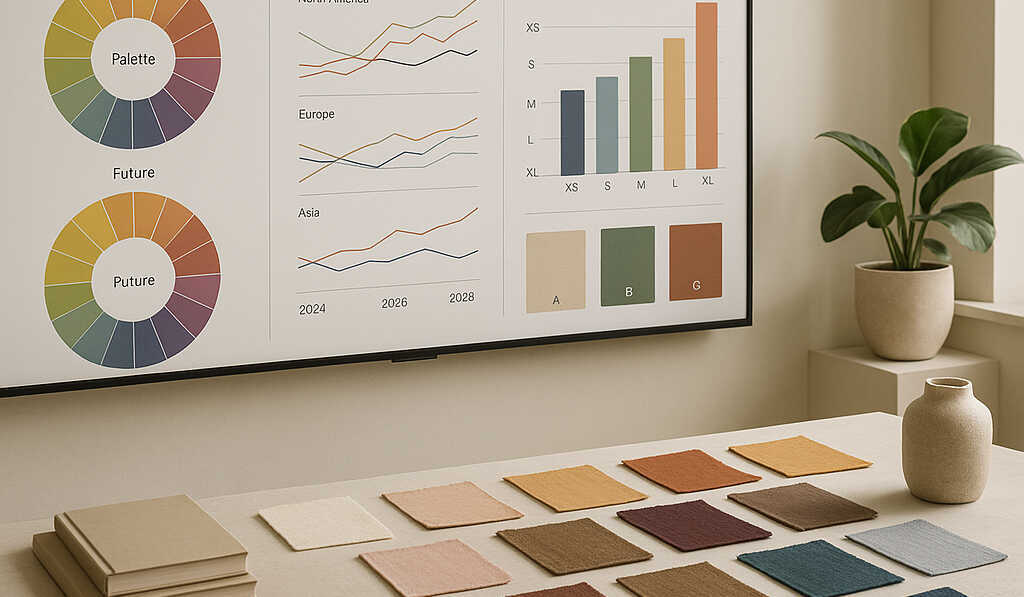
A colorway intelligence program fixes that by quantifying hue momentum by region, mapping palettes to silhouettes and fabric hand, and closing the loop into pre-season buys and in-season allocation. Start with signals that merchandisers recognize.
Track visual trend trajectories for color families (e.g., off‑white, espresso, lilac) across runway, social, and search—weighted by region and channel. Translate those into palette momentum (emerging, peaking, fading) with confidence bands. Connect palette to product truth: fabrics and finishes change perception (satin off‑white reads differently than matte), and category context matters (espresso suiting vs. active basics). Blend early intent (wishlists, waitlists, pre‑orders) as demand signals. Industry sources outline how visual signals predict demand and timing.
A clear primer on social‑led silhouettes and colors feeding buy decisions is here: Heuritech. Macro outlooks from BoF x McKinsey frame why precision in merchandising protects margin when demand is uneven; see the 2025 overview at Business of Fashion and the McKinsey collection at McKinsey. For color standards and naming discipline across teams, the Pantone Color Institute remains a practical reference: Pantone.
Design palette forecasting and buy loops
Design the system so buyers can explain every decision. Data model: define palettes and sub‑families with LAB or HSV values and friendly names (“off‑white,” “bone,” “ecru”) mapped to fabric finishes (satin, matte), category, and season. Tag transactions with availability to correct for stockouts so demand isn’t undercounted. Blend size curves by colorway; a hue that photographs differently may skew returns without fit changes. Modeling: estimate color demand by style/region/channel; borrow learning from similar silhouettes and fabrics to handle new SKUs. Output pre‑season color buy ranges with uncertainty bands and in‑season refreshes that nudge allocation (“shift espresso to EU; lilac fading in US”).
Pair intelligence with creative: shoot hero pieces in rising palettes early; compose “shop the look” outfits that harmonize colors (hardware tone, strap width, heel shape). Operational rails: wire PLM/PIM so palette tags are first‑class fields, not prose in descriptions. Keep a change log when names or mappings update. Ensure imagery is data: consistent lighting and color profiles reduce mismatch between studio and customer screens. For commerce baselines and discovery patterns that amplify palette decisions on mobile, revisit Shopify.
Operate with KPIs, tests, and creative guardrails
Run colorway intelligence like a P&L program. KPIs: full‑price sell‑through by colorway, stockout reduction on hero hues, markdown rate and depth on fading palettes, GMROI, and weeks of supply. Journey metrics: CTR and save rate on palette‑led edits, attach rate of complementary accessories (“silver hardware,” “warmer tone”).
Experiment design: start with one category (tailored dresses or knitwear) in two regions. Use randomized store/site cohorts or matched tests with pre‑registered stop‑loss thresholds. Segment by fabric finish and silhouette to isolate where palettes matter most. Publish weekly readouts that reconcile revenue lift and markdown avoidance with creative and shooting costs.
Guardrails protect brand and creativity. Keep aesthetic direction with design; use data to size bets and avoid over‑buying late‑stage trends. Maintain explainability with reason codes (“espresso rising in EU; satin finish strong; allocate sizes 2–6 heavier”). Privacy and reliability matter: evaluate consent at activation for any personalized content; keep retrieval boundaries tight; target P95 <300 ms for decisioning. References for leadership decks: Business of Fashion, Heuritech, and Pantone. When palette bets are sized by signal—and synced to creative and allocation—sell‑through rises without blunt markdowns.