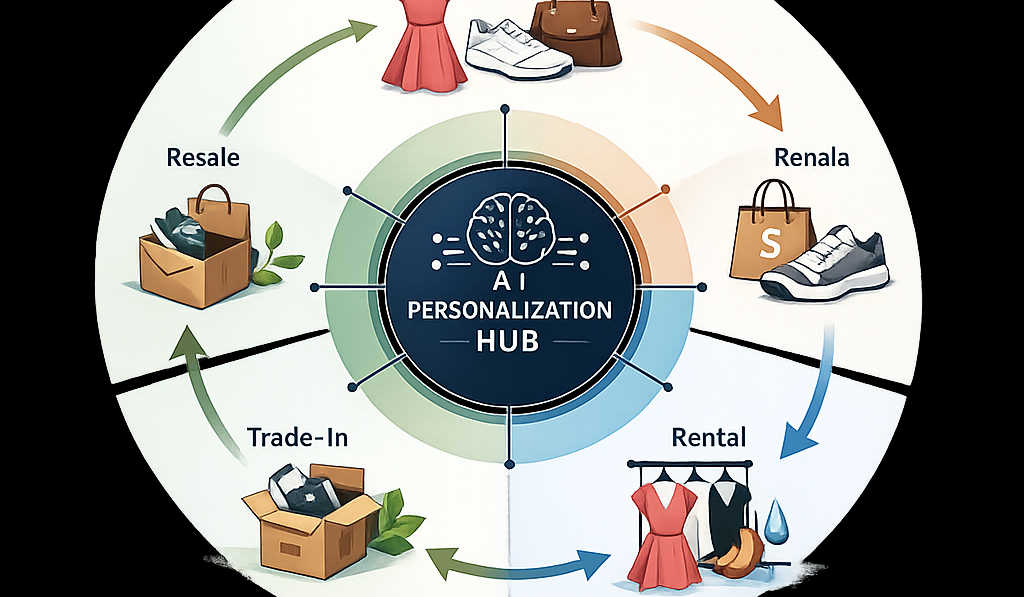
How AI-personalized fashion subscription boxes lift retention, AOV and loyalty for AFL brands.
Why AFL subscription boxes need AI-powered personalization now
AFL subscription customers judge every box against a personal standard: does it fit, reflect my style, suit my current needs, and justify the spend? A fixed assortment or broad segment label cannot answer those questions consistently. When recommendations miss, the cost appears in avoidable returns, exchanges, skips, cancellations, and inventory that reaches the wrong customer.
AI-powered personalization gives the subscription journey a feedback loop. It can combine declared preferences with purchase history, fit feedback, browsing behavior, returns, exchanges, seasonal needs, and available inventory to improve the next recommendation. The important design choice is to make each recommendation inspectable: show which signals shaped the selection, let the customer correct the profile, and keep merchandising teams able to override a result when brand, margin, or stock constraints require it.
The goal is not to automate taste. It is to make every customer interaction more useful while keeping humans firmly in control of the commercial and brand decisions that shape the box.
Designing AI-first subscription journeys for style, fit and sustainability
Start with the customer state, not the model. Create a governed profile that records style preferences, size and fit feedback, price sensitivity, purchase cadence, return reasons, and consent choices. Treat each signal as changeable; a customer’s needs, body measurements, budget, and occasion can shift between boxes.
Then connect four operational layers:
- Preference capture: collect explicit ratings, fit notes, style choices, and reasons for skipping or returning a box.
- Recommendation orchestration: rank products against customer preferences, inventory availability, assortment rules, margin constraints, and stated sustainability objectives.
- Evidence-linked experience: present concise reasons for each recommendation and give customers a clear way to accept, reject, or correct the logic.
- Merchandising control: let buyers and brand teams review exceptions, adjust guardrails, and pause recommendations that conflict with launch plans, stock positions, or product quality signals.
Sustainability belongs in the same design. Measure whether personalization reduces unsuitable shipments, unnecessary exchanges, and reverse-logistics activity without turning sustainability into an unsupported claim. Give customers control over trade-offs, including preferred materials, shipment frequency, packaging choices, and willingness to receive alternatives.
Operational guardrails, KPIs and roadmap for AI subscription programs
Personalization should be operated like a product with outcomes, not launched as a feature and left unattended. Define the decision rights first: which recommendations can run automatically, which require review, what data can be used, how long signals are retained, and how a customer can correct or delete their profile.
Metrics that matter:
- Track box acceptance and product-level engagement by segment, cohort, and recommendation reason.
- Measure return, exchange, skip, and cancellation rates alongside fit feedback and stated preference changes.
- Couple recommendation quality to commercial metrics such as retention, average order value, margin, and inventory utilization.
- Monitor correction rates, override rates, latency, and recommendation coverage to identify where the system is failing operationally.
- Measure sustainability indicators with an explicit definition and time window, such as unsuitable-item returns or repeat shipments caused by poor fit.
A 90-day rollout that sticks:
- Days 1–30: Define the customer profile and consent model; establish baseline retention, AOV, returns, exchanges, skips, and cancellations; pilot one category with human review.
- Days 31–60: Add recommendation reasons and feedback capture; connect inventory and merchandising constraints; test holdouts against the baseline; document exception paths.
- Days 61–90: Expand to additional cohorts; monitor correction and override rates; formalize model, data, and brand governance; review whether the program is ready for controlled automation.
Optionality is not free. If the program depends on a single model, provider, or opaque data flow, add an orchestration layer, clear fallback behavior, and an audit trail before expanding its reach. SageRetail can support this operating model by combining CRM insights, AI-driven content personalization, trend signals, and inventory-aware recommendations so AFL teams can improve the journey without giving up control over the decisions that matter.