#FashionInnovation
#DigitalFashion
#FashionEcommerce
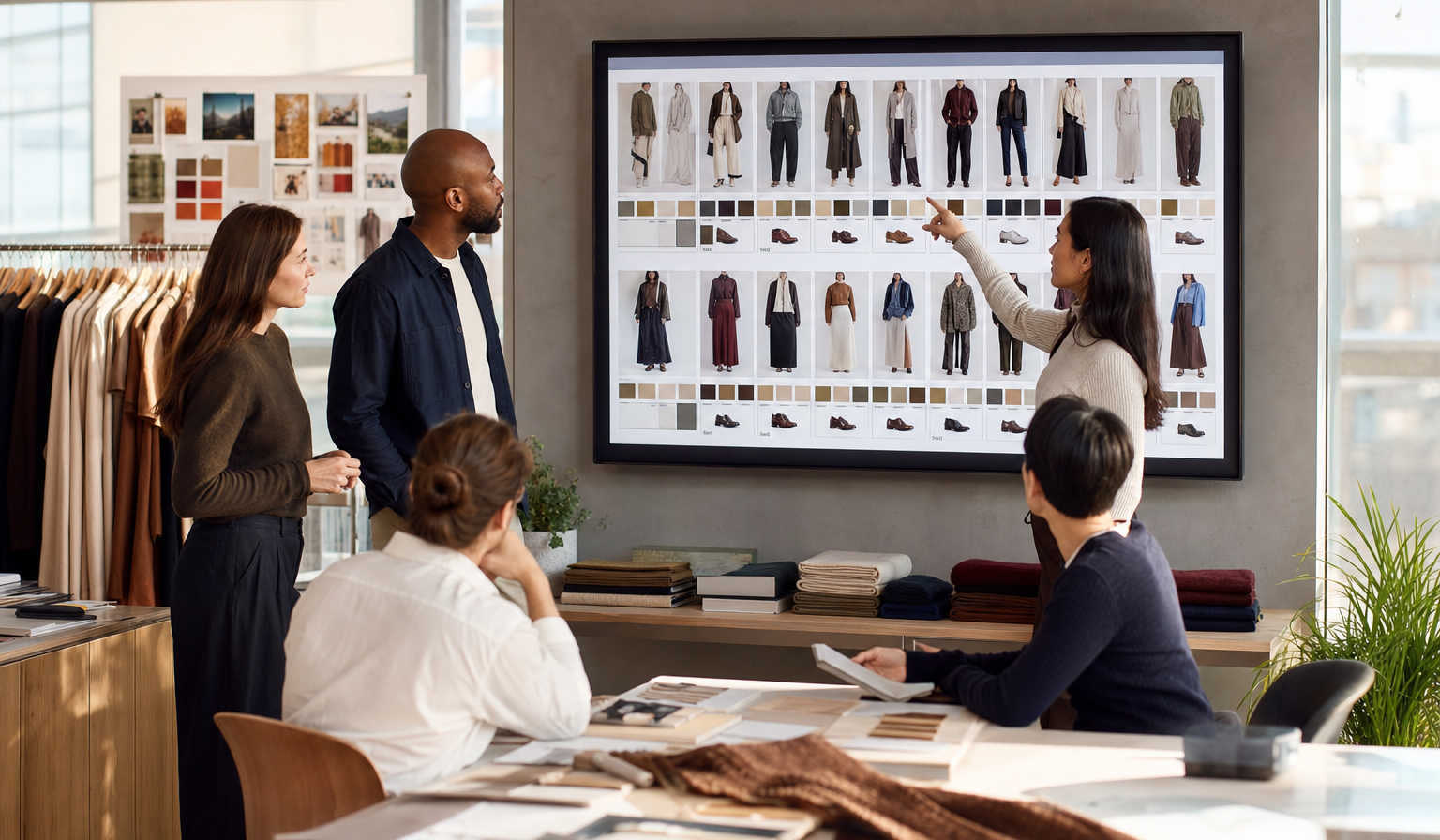

How AI-powered capsule merchandising helps AFL teams design, buy and trade tightly curated wardrobes that shoppers actually keep.
Capsule wardrobes have been a recurring fashion meme for decades: a tightly edited set of pieces that mix and match across occasions, seasons and moods. But for most Apparel, Footwear & Luxury brands, \"capsule merchandising\" still lives more in lookbooks and marketing copy than in the actual way assortments are planned and traded. Collections are often sliced by delivery window or category, not by the reality of how customers build outfits and wardrobes in their lives. As a result, shoppers frequently end up buying orphaned pieces that are hard to style and easy to regret—fuel for the industry’s return problem and fast-moving clearance racks.\n\nAI gives AFL brands a way to turn capsule thinking into an operational discipline. Instead of building everything around individual SKUs or broad categories, MapleSage’s SageRetail platform can help teams design, buy and personalise assortments as interlocking wardrobes tuned to specific tribes, missions and climates. The goal is not to dictate a minimalist lifestyle, but to ensure that each piece in a capsule has a clear role to play in customers’ lives and a high likelihood of repeat wear.\n\nSearch signals suggest this is a ripe niche for thought leadership rather than a pure SEO land grab. Semrush returns limited direct results when querying phrases like \"capsule wardrobe merchandising\" or \"AI capsule assortment,\" indicating that competitors have not yet flooded the space. Yet consumer-facing interest in \"capsule wardrobe\" and \"how to build a capsule wardrobe\" remains strong, with high search volumes and a steady stream of content across fashion publications and TikTok. Semrush – Capsule Wardrobe Keyword Data Publications such as Vogue, Harper’s Bazaar and Refinery29 regularly publish guides and seasonal capsule ideas; TikTok’s #capsulewardrobe tag showcases millions of views where creators show how they remix a handful of pieces into weeks of outfits.\n\nWhat’s missing is a B2B, AFL-specific perspective on how to make capsule thinking work inside a fashion business: how to design capsules that reflect brand DNA and real customer missions, how to buy against them without over- or under-investing, and how to personalise their presentation so that each shopper sees the capsule that fits their style, life stage and climate. That is where MapleSage’s AFL positioning is distinctive. SageRetail can ingest PLM attributes (silhouettes, fabrics, palettes, capsule tags, modesty and sustainability flags), CDP profiles and behavioural data to create \"AI capsules\"—sets of products that work together for a given tribe and mission. These can then power everything from collection briefs and merchandising plans to AI style feeds, outfit builders and email journeys.\n\nFor MapleSage’s ICPs—VP Merchandising, Fashion CMOs, E-commerce Directors, CX Directors and Fashion CTOs—AI capsule merchandising offers a shared language that connects creativity and cash. Designers and merchandisers can still chase trends and experiment with silhouettes, but they do so with a clearer view of how pieces fit into customers’ wardrobes, not just into lookbooks. Marketing teams can promise \"five pieces, fifteen outfits\" knowing the underlying assortment supports that story. And customers themselves can feel that the brand is helping them build a wardrobe they will actually wear, not just a closet full of impulse buys.
If the design and buying side of capsule merchandising is about deciding what belongs in the rail, the operating side is about ensuring that rail performs: it sells through at healthy margins, supports storytelling across channels, and teaches the organisation something useful for the next season. AI-powered capsule merchandising becomes a growth engine when it is wired into the daily work of merchandisers, planners, marketers and CX teams, rather than living in an isolated analytics dashboard.\n\nFor AFL leaders, success starts with the KPIs they choose to monitor. VP Merchandising, Planning heads and CFOs should look beyond category-level sell-through to capsule-level performance: weeks of cover, full-price sell-through, markdown depth and net revenue after returns for each capsule, broken out by region, channel and tribe. Because capsules are meant to function as cohesive wardrobes, it’s also important to track basket-level metrics: average order value, units per transaction and cross-category attach rates (for example, jackets with dresses, shoes with denim) when shoppers interact with capsule-led surfaces versus generic grids. MapleSage’s SageRetail can provide this view by tagging and tracking each shopper interaction with capsule rails, style feeds and outfit builders, then attributing outcomes accordingly.\n\nExternal examples reinforce the value of this approach. Stylitics’ outfitting and bundling work with retailers like Express and DTLR shows that outfit- and capsule-led discovery reliably drives higher UPT and AOV than single-SKU merchandising, particularly when bundles are tuned to missions (\"back to work,\" \"date night,\" \"festival season\"). Stylitics – DTLR Outfit-Based Discovery Case Study GoML’s Modamia case study illustrates how letting shoppers design personalised outfits and capsules with AI support increased engagement and conversions, proving that customers respond strongly when they can see how pieces work together. GoML – Modamia AI Fashion Personalization Case Study Academic work on AI-driven capsule wardrobe generation shows that considering cultural, climatic and situational contexts leads to more relevant, repeatable outfits, which is exactly the kind of nuance AFL brands need when planning regional capsules. IEEE – Multimodal AI for Capsule Wardrobes\n\nGovernance should reflect this cross-functional nature. A \"capsule council\" including Design, Merchandising, Planning, Digital, CX and Sustainability can own which capsules are designated as AI-led pilots, what sustainability targets apply (for example, lower overproduction and higher utilisation of sustainable fabrics), and how risks are managed by segment—more aggressive experimentation in fast fashion and contemporary lines, tighter guardrails in luxury and performance wear. SageRetail underpins these decisions by surfacing which capsules are over- or underperforming relative to expectation, and by suggesting specific levers: expanding size curves for a high-demand modest tailoring capsule in GCC; reducing depth and markdown exposure on a micro-trend denim capsule in Northern Europe; or leaning harder into a colour story that is resonating strongly with Gen Z streetwear tribes.\n\nAs this operating model matures, AI capsule merchandising stops being an occasional design exercise and becomes a habit. Each season, insights from capsule performance feed back into briefs (which silhouettes, palettes and price architectures deserve repetition or evolution), into PLM (how to encode capsule relationships and outfit rules more precisely), and into marketing (which narratives and missions drive the best net revenue after returns). For MapleSage’s AFL clients, SageRetail becomes the engine that keeps this loop spinning—quietly embedding capsule thinking in every decision from lookbooks to size curves—while the organisation focuses on what it does best: designing fashion that customers can wear far more than once.
Treating AI capsule merchandising as a cross-functional engine rather than a one-off initiative also changes how teams think about risk, creativity and sustainability. When capsules are built and monitored as discrete portfolios—with clear guardrails and feedback loops—brands can experiment more boldly in some areas while protecting core lines and hero products in others. AI helps make those trade-offs explicit rather than intuitive.\n\nFor VP Merchandising and Chief Merchandising Officers, capsule-level views from SageRetail make it easier to justify both creative bets and conservative calls in board discussions. A high-risk, trend-led denim capsule aimed at Gen Z can be framed as a contained experiment, backed by AI signals from social and search, with pre-defined exit criteria and markdown strategies. A modestwear capsule for Ramadan can be positioned as a long-term, customer-backed franchise, supported by historic keep-rate data and CLV uplift among specific tribes in GCC and Southeast Asia. In both cases, AI is not making the decision, but it is framing the decision with richer evidence than static sell-through reports.\n\nFrom a sustainability perspective, capsule merchandising powered by AI can support more responsible production. By learning which combinations of silhouettes, fabrics and price points generate repeat wear and high keep-rates for specific cohorts, brands can shift assortment emphasis away from disposable micro-trends toward pieces that build real wardrobes. McKinsey’s sustainability analyses and Ellen MacArthur Foundation work on circular fashion both emphasise that extending the life of garments is one of the most effective ways to reduce environmental impact; capsule strategies that encourage re-combination and longevity are natural allies. McKinsey – Sustainability in Fashion Ellen MacArthur Foundation – Fashion and the Circular Economy\n\nFor MapleSage’s AFL ICPs—Fashion CMOs, E-commerce Directors, Fashion CTOs and Merchandising VPs—this topic sits squarely at the intersection of Campaign 1 (AI Personalization for Fashion Customer Loyalty) and Campaign 3 (Fashion Merchandising Automation & Trend Intelligence). AI capsules become the bridge between the story told in campaigns (\"build your summer city capsule,\" \"curated Eid dressing,\" \"elevated performance essentials\") and the realities of buy plans, inventory and returns. When capsules are planned, personalised and traded with SageRetail at the centre, brands are better positioned to deliver wardrobes that feel tight, intentional and keep-worthy—while improving the numbers that matter most to the board: full-price sell-through, margin, CLV and sustainability impact.